
People Management
Employer branding: what it is, why it matters and 4 actions to apply in your company
Employer branding is a strategy that improves your company's image with the best talent in the market. Learn how it works and how to apply it.

To attract and retain the best talent in the market, and to reduce turnover, companies are putting employer branding in place.
It is a marketing strategy, usually developed by the Human Resources team, that builds a positive perception of a company as a place to work. For that to happen, the technique has to become an everyday practice of the recruiting and selection team.
Through this approach, the organization improves its productivity and lowers the costs of a hiring process, as well as of hiring and training new employees.
So if you want to understand what employer branding is and how to put it into practice, this article is for you. In it you will learn everything you need to apply this strategy in your business. Keep reading and check it out!

What is employer branding in HR?
Employer branding is the sum of actions that create a positive market perception of a company’s work environment, helping to attract and retain talent. So when a company becomes the object of someone’s desire or interest as a place to work, that person was very likely reached by some employer branding action.
That is why employer branding strategies are becoming more and more common: in a more competitive scenario, the best talent looks for companies that offer not only the highest salaries, but also the best working conditions.
In this sense, employer branding strengthens the positive points of working at the organization, enhancing the company’s image among the most sought-after people in the job market. Keep in mind that the best employer branding strategies are not about lying or hiding information to attract promising talent, but about knowing how to promote the company’s true culture and make it attractive.
So once the company applies this strategy correctly, it becomes sought after, especially in recruiting and selection processes. As a result, every department ends up with high-performance teams that are far more productive.
Learn more about the new era of Human Resources in this webinar on HR 4.0 (in Portuguese):
What is the goal of employer branding?
The main goal of the people management team with employer branding is to enhance the company’s image, as a work environment, among the best professionals in the market. The logic is that talented people feel drawn to certain brands, without ever having worked there, after being reached by a campaign.
That makes selection and recruiting simpler, because the most talented professionals are already watching the opportunities the company offers. This streamlines and speeds up HR processes, which can quickly tell who will move on to the next stages.
And with the best professionals taking part in the selection process, the organization spends less across the whole process.
Also, the logic is that talent stays longer at the company with employer branding actions. After all, they are reached daily by HR’s actions and feel more and more connected to the brand’s culture.
Also read: See employer branding actions to apply in practiceopens in a new tab
What benefits does employer branding bring to the business?
The main benefit of employer branding is that it helps increase the organization’s profit. By attracting the best talent in the market, the company has more productive people, who automatically generate more profit for the business.
In addition, with lower turnover, the costs of dismissals and of hiring new employees are less frequent, which avoids waste.
Beyond that benefit, other advantages can be expected from applying employer branding, such as:
- greater talent retention;
- attraction of potential high-performing employees;
- spontaneous word of mouth for the brand;
- lower recruiting costs;
- better final product quality from having the best professionals;
- higher productivity.
To highlight how important the strategy is, according to LinkedInopens in a new tab itself, an organization with a strong employer brand sees an average 43% reduction in cost per hire.
Why is employer branding important?
The greatest importance of employer branding is the radical change in a company’s organizational culture, making it more attractive in the eyes of the market’s top talent.
It is worth saying that this is not just about marketing the company’s image, but about changing the whole internal culture to the point of making the work environment more pleasant and dynamic for everyone. In other words, employer branding is not only about promotion or marketing, but about building actions that actually create value for the employee.
That is why the strategy is a set of actions that, if well developed, make the work environment itself much better.
As a result, good professionals feel more drawn to work at the company, and once there they will not leave the job even if another organization offers them higher pay.

How to build employer branding
As seen, employer branding brings countless benefits to the company, and implementing it requires the involvement of people, as well as the application of a variety of stages.
Below we selected some steps needed to implement this strategy in your business.
1. Define the goal and create the strategy
As with any strategy, the first step your company needs to take is to define a goal for the employer branding actions. After all, the strategy is nothing more than the means by which the goal will be reached.
So there is no way to adopt a strategy without a well-defined goal. This is therefore the first action your company needs to take.
Just as an example, a goal can be to:
- attract the best candidates in the market for specific openings;
- improve the work environment to reduce turnover;
- improve the organizational culture.
Once the goal is defined, you need to select the team that will work on implementing the project. This team will be responsible for building the strategy to reach those goals. Usually the HR team, having access to people indicators such as turnover, is responsible for defining the goals and, if there is no dedicated employer branding team, selecting the employees who will support the actions.
Note that these strategies need to be measured through indicators that show, at a set frequency, whether the company is on track to reach its goal.

2. Diagnose the current situation
There is a starting point and a finish line. The finish line is clearly the goal, and the starting point is the company’s current state.
So to create a good employer branding strategy that leads to meeting the goal, it is essential to diagnose the company’s current situation.
How? By gathering employees’ current perceptions of the work environment. That means the best way to understand the current situation is to listen to people.
Running an eNPS survey or an organizational climate survey are excellent ways to diagnose the situation and kick off the strategy. However, the survey needs to point out:
- measurable facts - benefits, pay, allowances, etc.;
- non-measurable facts - leadership, flexibility, management, transparency, learning opportunities, etc.
By listing these factors, the team responsible for implementing employer branding clearly sees the organization’s weaknesses and strengths.
3. Communicate the goal to everyone
When the team has the strategy ready, indicators selected, the goal well defined and the diagnosis done, it is time to communicate that goal to everyone.
In other words, employees need to know where the company stands, what will be done and where the organization intends to get to. The idea is to create synergy so that everyone works toward meeting the goal.
4. Plan and carry out the actions
Once your employees’ current needs are identified, it will be up to HR and the others involved to carry out the different action plansopens in a new tab to improve perceptions. Some organizations choose to split the goals into three phases:
- short term;
- medium term;
- long term.
That makes it easier to outline the daily actions and to assess whether the bigger, long-term goal is on its way to being reached.
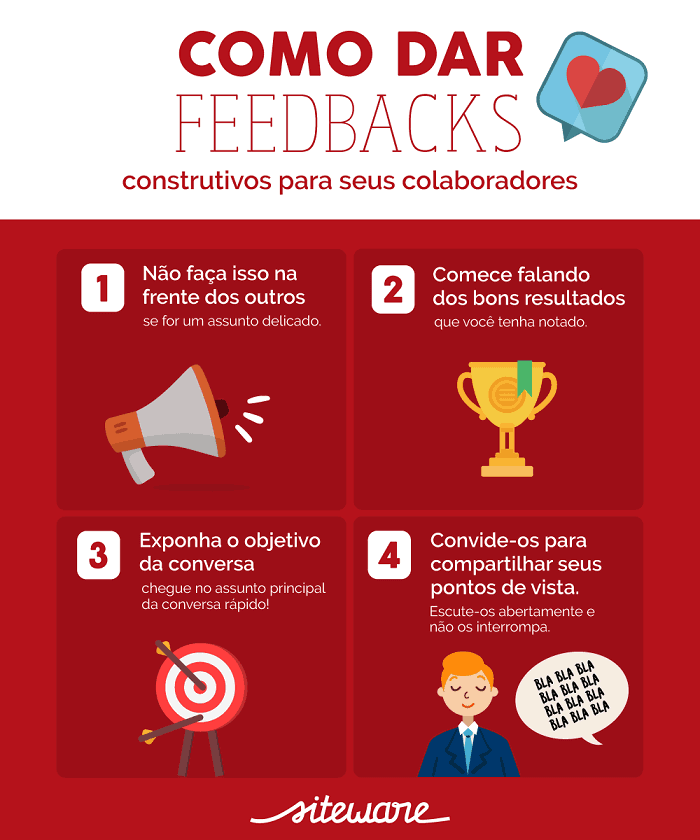
In a scenario where communication problems between employees were identified, one solution can be to implement a feedback culture, for example. After all, with a strong culture focused on employee development, it is easier to build more effective ways of communicating.
See how to give constructive feedback to your employees:
5. Define the Employment Value Proposition
The Employment Value Propositionopens in a new tab (EVP) is the value proposition within employer branding. In other words, it is where your company defines the main benefits that make up its employer brand. That way, after creating the first actions, the organization will have arguments to claim that the company values a culture of feedback and good communication, because it is investing in that, for example.
This document reveals what sets being an employee at your company apart from other companies in the market. In it you show what you expect for the role and what your company offers in return.
This can translate into benefits, the expectations professionals have about their careers, and other relevant points.
6. Build a strong organizational culture
Organizational culture is the set of internal beliefs, principles, habits and values the organization carries. The logic is that your employees need to connect with what the company also believes in. So keep clearly in mind the types of people your brand wants to attract.
This culture should therefore be shared in the selection process and constantly reinforced day to day, so that employees adapt to it as quickly as possible.
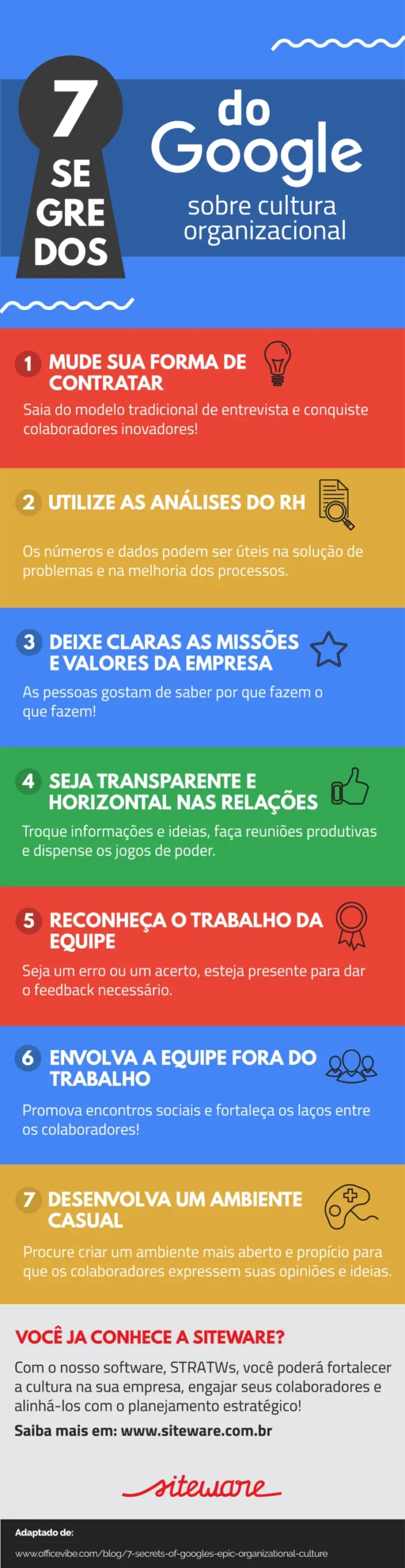
See everything about Google’s organizational culture:
Challenges and solutions
Promoting employer branding inside a company is not a simple task and involves a series of challenges. However, with the right strategies, it is possible to overcome these obstacles and build a strong, attractive employer brand.
One of the first challenges companies face is lack of understanding or recognition of the importance of employer branding. Many organizations still see it as a secondary strategy and do not give it proper attention or resources. The solution starts with educating and raising awareness among leaders and decision makers about the direct impact a strong employer brand can have on attracting and retaining talent, as well as on financial results.
Another common challenge is inconsistency in brand communication. A company may promote a positive image externally, but if that image is not reflected internally in its culture and practices, current employees may feel dissatisfied and disillusioned.
The solution here is to make sure the employer brand is authentic and aligned with the company’s reality. That means not only promoting a positive image, but also actively working to create a work environment that reflects it.
Resistance to change is another obstacle. Implementing employer branding strategies may require significant changes in the company’s culture and practices. Overcoming that resistance requires clear communication about the benefits of those changes, as well as including different departments and hierarchical levels in the decision-making process.
In addition, measuring the success of employer branding can be challenging. Many companies struggle to set clear metrics that show the return on investment. The solution is to define key performance indicators, such as retention rates, time to hire and employee feedback, and monitor them regularly.

Employer branding examples
Now that you understand what employer branding is, its benefits, its importance and how to apply it, there is nothing better than seeing some examples.
After all, large organizations have been applying the concept for some time and have already seen the need for a stronger culture.
1. Netshoes
Netshoes is a young company, created in 2014. In its first years, the organization, like most, hired people based on its mission, vision and values.
Although the three were well defined, the company’s team was not participative or engaged. Rigid selection processes did not win over the market’s talent.
Realizing it was hard to attract candidates with the desired profile, Netshoes restructured its internal policies and built a reputation based on valuing skills.
The company’s project was divided into stages, the first being a diagnosis of the current situation. Then the diagnosis was aligned with the founder’s vision.
Next, the values were defined, communicated to the team and later shared and aligned across the whole company, including in selection processes.
The result was that, over time, Netshoes attracted the best talent in the market with a clear policy of benefits and personal growth.
2. Google
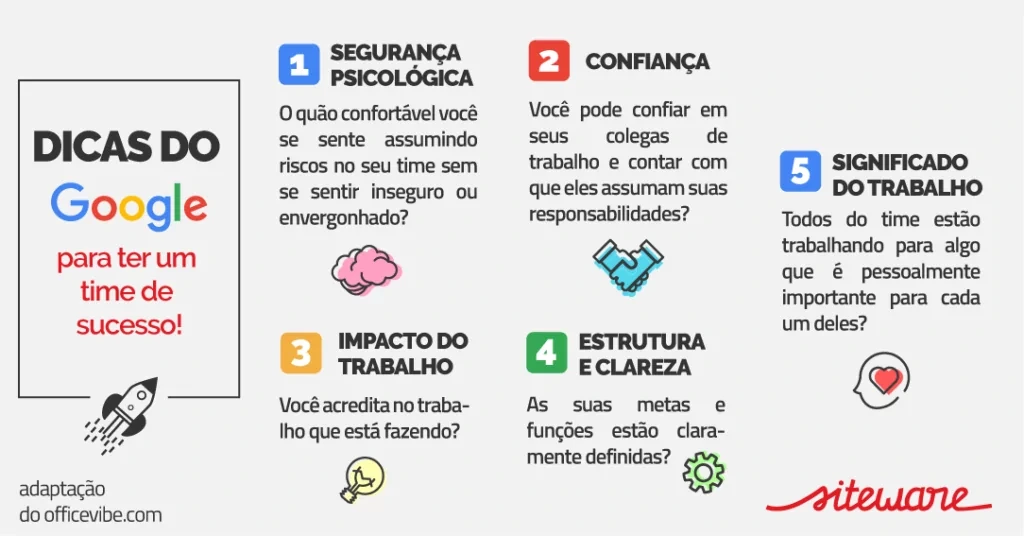
Google is the company with the most job applications. The best professionals in the market dream of working there. But what is the secret to this success?
In short, Google has employer branding practices that catch the eye of the top talent. To name just a few actions, the organization offers:
- a career plan for employees;
- above-average benefits;
- an interactive and dynamic work environment;
- a focus on creativity and productivity.
The combination of these benefits made the company the goose that lays the golden eggs of the market, and that is why its selection processes saw a deep reduction in costs.
3. L´Oréal
L´Oréal is also a company that was one of the pioneers in implementing employer branding internally. The organization’s starting point was to increase engagement on social media to get closer to professionals.
It then created a flow of information and opened access to its communication channels, turning its social networks into recruiting opportunities. As a result, brand advocates started interacting more with the company.
What worked well was that the organization encouraged employees, as well as consumers themselves, to tell their story on the company’s networks. That engagement began attracting many more people to the selection processes.
4 employer branding actions to apply in your company
We saw in the previous sections that employer branding actions can be advantageous to a company in several ways. Now you will see suggestions for employer branding actions you can apply in your company.
1. Invest in internal communication
Before any employer branding action, you need well-established internal communication channels. That way, when needed, it is possible to reach all employees quickly and efficiently.
Some software, such as Feedz and Slack, for example, can help with this process.
In addition, in Stratws, developed by Siteware, you can give feedback, run performance review cycles and prepare complete reports that can be presented in meetings with the whole team.
2. Have training and development solutions
Every employee wants to grow in the job market and, if you make that growth possible at your company, it is easier to retain more talent.
That is why one of the most important employer branding actions is investing in employee training and development. This can be done by offering courses, events and opportunities for growth within the organization.
3. Have a well-defined mission, vision and values, and communicate them
Every company, to reach bigger goals, needs a well-defined mission, vision and values. That gives clarity about the organization’s culture and expected results.
However, more than defining these points, you need to communicate them, both to internal audiences and to the job market. Social media can be used for this and, in this case, LinkedIn is the best option.
3. Adapt to the current market reality
The job market is always renewing itself and, in the effort to attract and retain talent, companies have adopted innovative practices that can make a big difference in the organizational environment.
Some examples of these practices your company can adopt:
- Flexible hours;
- Hybrid work;
- More attractive corporate benefits;
- Additional benefits, such as Gympass;
- Awards for length of service;
- Among other benefits.
Technology building the employer brand
As we saw in this article, an employer branding strategy builds an organizational culture so strong in the company that it attracts the best professionals in the market in its selection processes.
However, there is no way to create a dynamic environment without the help of technology. After all, good HR software contributes to that dynamism by helping managers understand the internal demands of all employees.
By listening to these demands, the company turns the work environment into something far more innovative. And if you are looking for good software, a good option is Stratws, from Siteware.
It enables real-time feedback, improves the internal flow of information, assesses which benefits are most attractive and strengthens your organizational culture.
It also supports the retention and development of new talent through automated skills assessment cycles.


About the author
Equipe Siteware
Content produced and reviewed by the Siteware team, curated by internal experts in strategic management and corporate performance.