
People Management
Continuous feedback: what it is, why it matters and 4 tips on how to implement it
Find out what continuous feedback is and how it works, why to do it and 4 tips on how to implement this method in your company.

Building a feedback culture can help your company get better results and become more competitive. And when feedback is given continuously, employees gain greater clarity about their performance and about what needs to be done to keep improving. That is continuous feedback.
In this article, we explain what continuous feedback is, how it differs from periodic feedback and why you should adopt a continuous feedback culture in your company as soon as possible.
You will also find 4 essential tips on how to implement continuous feedback in your company:
- Run frequent reviews;
- Be as clear as possible in what you say;
- Set simpler goals;
- Use technology as an ally.
Siteware prepared a Feedback Model template, where you can define improvement points and create complete action plans for your employees. Click here to download it nowopens in a new tab (in Portuguese).
What is continuous feedback?
Feedback is a management tool. It is a response that leaders give to their team members (and vice versa) about their performance on certain tasks and also about their behavior at work. In other words, a return on the professional in the corporate environment.
The purpose of feedback is to let the other party learn about their performance and receive suggestions on the points they can improve, so they can apply better practices in their day-to-day work.
With continuous feedback, responses are given constantly instead of waiting long intervals between one feedback and the next.
In other words, we can define continuous feedback as a practice that seeks to establish frequent dialogue between managers and employees to promote continuous improvement and solve problems as quickly as possible. That way, it is possible to get real-time feedback on one’s own performance and behavior day to day.
In a feedback situation, the manager can talk about the employee’s professional performance as well as their behavior in the work environment. That can create a more pleasant environment and a lighter organizational climateopens in a new tab (in Portuguese). An organizational climate surveyopens in a new tab (in Portuguese) helps measure that result.
Why does continuous feedback matter for companies?
The importance of continuous feedback lies in the greater motivation this practice generates in employees.
Continuous feedback also makes the onboardingopens in a new tab of new employees more dynamic. New hires understand their responsibilities more easily and carry out their activities with more confidence.
Continuous feedback is also important because it lets you eliminate problems as they appear. That way, failures are fixed before they take on more serious proportions.
Finally, implementing continuous feedback contributes to lower employee turnover, fewer internal conflicts and higher productivity.
Also, unlike more widely spaced feedback, which in many cases happens once a year, it allows for more constant feedback. That makes it possible to realign paths faster, helping improve results. One-on-one meetings and feedback can make employees feel part of the team and, as a result, be more engaged in reaching goals.
What is the difference between continuous and periodic feedback?
Continuous and periodic feedback have the same goal, but the difference lies precisely in the interval between one response and the next. On this topic, see also Agendor’s content on performance feedbackopens in a new tab (in Portuguese).
With continuous feedback, responses happen at shorter intervals, quickly. With the periodic format, people usually wait a long time between one feedback and the next, and the sessions also tend to be longer and more complex.
With shorter intervals, it is possible to face challenges and obstacles faster. All of this contributes to a better organizational culture and to more agile, strategic people management.
4 tips on how to implement continuous feedback in your company
If you are interested in learning how to give continuous feedback to your company’s employees, here are 4 tips to help you implement this method. The first step, however, is to learn more about your team and the individual characteristics of each employee.
1. Run frequent reviews
As we mentioned, the main characteristic of continuous feedback is how often it is done.
Do not worry too much about excessive formality, and do not wait too long to talk to your employees about their performance.
What type of performance review is used in your company? There are several types of review. In the video below, learn about 8 types of performance review, check them out and choose the ideal one for your business:
Read more: How to run a constructive performance reviewopens in a new tab
2. Be as clear as possible in what you say
During continuous feedback, it is important to be clear when pointing out mistakes and successes, setting goals and giving guidance on how employees can improve.
Here are some feedback tips:
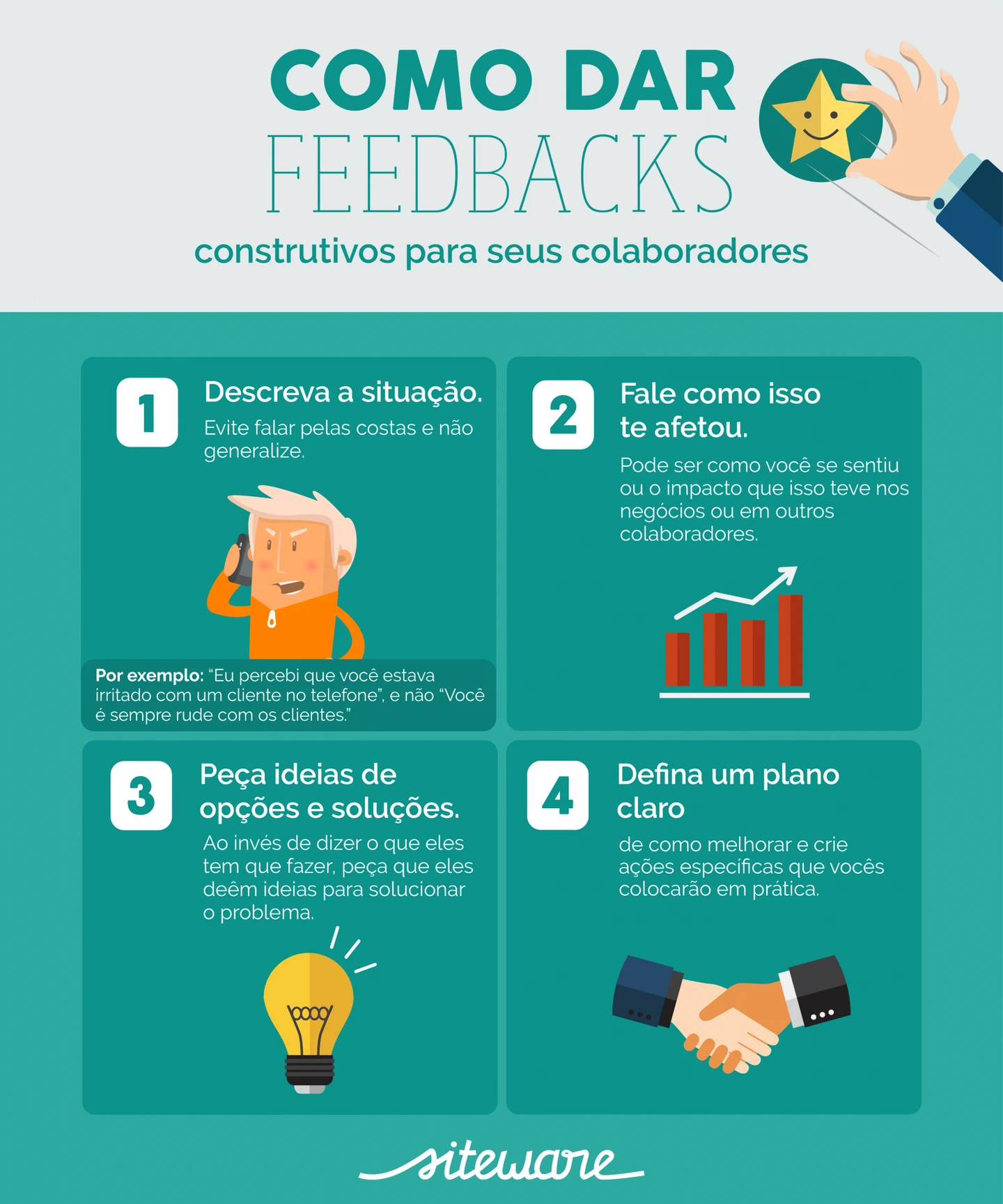
3. Set simpler goals
Since feedback is given continuously, you can set less complex, simpler goals. That way, with each small milestone employees reach, they will feel more motivated in their tasks.
It is important to set not only corporate goals for the employee, but also personal goals.
See how in this video:
4. Use technology as an ally
Technology can be a great ally in promoting continuous feedback and in performance management in general.
With specialized software, you can organize individual and team metrics and analyze the historical progress of each employee and team.
So, is it clear what continuous feedback is? Implement this method in your company and lead your employees to better and better results.
How to track continuous feedback day to day?
Continuous feedback pays off when the outcome of each conversation is recorded and turns into action. Without a history, what was agreed gets lost, and the next feedback starts from scratch.
In Stratwsopens in a new tab, the strategic and performance management platform created by Siteware, managers and employees record feedback, one-on-one meetings and IDP actions in one place, with history and deadline signaling.
Visit our website and explore the Performance and Development Management solution in Stratwsopens in a new tab.

About the author
Equipe Siteware
Content produced and reviewed by the Siteware team, curated by internal experts in strategic management and corporate performance.