
People Management
What the onboarding process is and the 7 steps to implement it
Want to improve talent retention in your company? See 7 steps to use the onboarding process to welcome your new employees well.

The arrival of new employees is one of the most important moments for organizations and for everyone involved. A successful introduction is essential for the new hire to understand how processes work and helps them adapt faster. That is why the onboarding process matters so much.
But do you really know what the onboarding process is? Do you know how to implement it in your organization?
In this article, you will learn the details of this process, which matters so much to companies. You will also see the 7 main steps to put it into practice right away and enjoy all of its advantages.
Keep reading to learn more!
See also: Employee Experience: what it is and how to implement it in your company
What is the onboarding process?
The onboarding process is a series of actions organized by companies so that newly hired employees are welcomed and integrated with colleagues and the work environment.
That way, people get a view of the company’s teams, who they can turn to if they need support, which tools are available to them and how daily processes work.
This process is made up of different tasks that involve every area, with the HR department standing out.
It is also worth stressing that this process is not just about a new employee’s first week. Integration and onboarding of new employees begin the day the job posting is published and last until the person is settled into their position.
The bureaucratic part of hiring, such as requesting documents and signing contracts, is a common step in any company, whether or not it has an onboarding process in its culture.
Remember: first impressions last! That is why you need to give an excellent welcome on the very first day of work.
So implementing a series of steps of this process as early as possible is essential to help each new team member at the start of their journey.
Companies with a good onboarding process are keeping talent on their teams for longer and also contribute to a healthier organizational climate.
What are the advantages of applying the onboarding process in companies?
Besides keeping the focus on retaining employees and talent in your organization, the onboarding process brings a number of other advantages, driven by the people management team, such as:
- Employees better prepared for the company’s routine;
- Understanding of the company culture before starting their tasks;
- Promotion of a healthy organizational culture;
- Extra motivationopens in a new tab for employees to perform well;
- Alignment of expectations between company and employee;
- Lower turnoveropens in a new tab in roles;
- Faster adaptation of new employees;
- Better integration between new team members and longer-tenured employees.
Step by step to implement an effective onboarding process
Here is a complete step-by-step with every action you need to take during the onboarding process:
1. Send a cheerful e-mail to confirm the hire
Today, the main way to confirm approval in a selection process for a job is e-mail, even more than a phone call, with the important information to start work at the company. However, one action does not rule out the other. If your HR team wants more humanization but also wants to keep things formal and professional, both actions can be used.
In that case, call to share the news and then send the confirmation e-mail with the information the employee needs to start the onboarding process.
Besides all the key details, such as start date and time, it is nice to use gifs and emojis that show how happy you are to have the new hire on the team.
This animation, right when the hire is announced, already creates a positive feeling of receptiveness and helps the new hire arrive knowing they will be welcomed.
2. Prepare a series of meetings with company leaders
Of course, each employee needs to know which activities they will be responsible for day to day. But for your onboarding process to succeed, you first need to show how each department in your company works, giving them a broader view.
So set up a presentation with each team leader. It should show the specific work of their department within the company and how the different areas relate to each other to reach the same overall strategic objective.
Prepare also a calendar of meetings between managers and new hires. That way, everyone starts work knowing each team’s role in the company. They also already know part of the team, namely the representatives of each department.
3. Make the first day magical
Remember what your first day of work was like at the companies you have worked for?
It may not have been anything spectacular, but if you want to achieve all the advantages a good onboarding process can offer, you need to understand that the ideal is to offer a memorable day to your new employees.
To do that, focus on getting several points ready, such as:
- Have everything ready for the start of work: from the company e-mail account to the logins for important tools used day to day, everything should be written down and handed to the new employee;
- Hand out a welcome kit: work materials should of course be provided by the organization, but the way they are delivered greatly influences the impression left during the onboarding process. So create a good welcome kit. It can include t-shirts, mugs, pens, stickers and so on;
- Introduce the company: giving a tour and asking everyone to greet the newcomers is a great way to present every detail of the company and the people who are part of it.
4. Do not demand “hard work” right away
A very common mistake in companies is to demand a lot of work in a new employee’s first few days. Some organizations even ask for a task to be completed on day one, but the focus should be the new employee’s integration.
Even when hiring someone already experienced in the market, they need to adapt. They need to know the main objectives of their role and understand what part they can play in helping their colleagues.
And only a well-focused onboarding process without distractions can provide that.
Want to learn about another HR process that helps with talent retention? Count on a good succession plan in your company.
5. Ask for feedback on everything done during the onboarding process
Will new hires evaluate your company fairly on the first day?
Probably not. But if you leave a few channels open for honest feedback, they will be more willing to offer solutions to problems you had not even noticed.
The onboarding process creates a new perspective. Do not be afraid to ask new hires what they have seen that is positive or negative so far. That way, they will feel heard and you will learn about any improvements needed.
It also shows that opinions are taken into account in your company, raising employees’ morale and sense of importance within the organization.
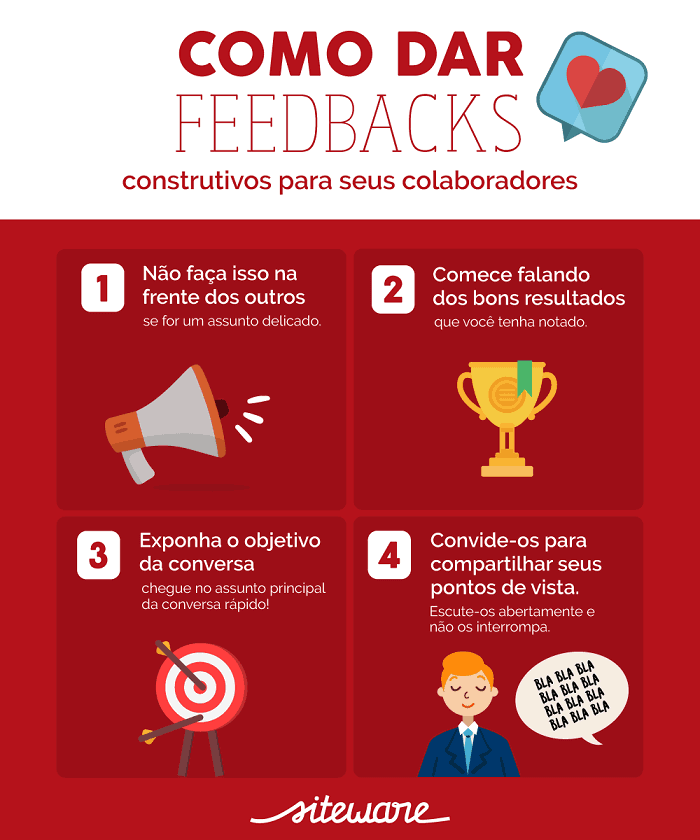
See how to give feedback the right way:
6. Work with the company’s past and future
During the onboarding process, remember to cover the company’s past and history. This helps the new employee understand how the organization got where it is and how hard that was.
Also present the company’s next steps and future: expanding internationally, growing the headcount or creating new software?
So, besides talking with each team’s leader, set aside a little time in the onboarding process for an immersion in the company’s history.
7. Offer personalized training
A common move (and usually a mistake) is to make the onboarding process rigid. The logic should be that each arrival is personalized, since people in different departments will need different knowledge.
In that scenario, it is important to map each person’s needs and what will have to be invested in arrival training.
Tips for a successful onboarding
The arrival of new employees is an important moment for the company and also for them, as they need to adapt to a new professional routine. In that case, the best tip is always to personalize the onboarding process, since each person will have different needs. There are also common actions that tend to work, such as:
1. Different journeys
Onboarding is a moment of many connections: with the company culture, with coworkers and with the organizational environment itself. That is why it is important to build different journeys, making sure the employee can connect with each of these aspects.
2. Promote knowledge paths
Platforms and channels that offer informational and training content can help the employee adapt faster to the company’s needs.
3. Ask for feedback
Throughout the onboarding process, it is important to hear different perceptions from everyone involved. When the stages are ending, ask the new employee for feedback. This can help HR build a better onboarding process that is always looking for improvements.
A tip that can be very useful is to hear from the employee weeks after onboarding to learn whether they found the process useful and what could be improved to help the next ones.
Next steps
The onboarding process is only the first steps of the new employee inside the company. From there, leaders, assisted by HR, need to keep working so that people stay engaged and keep evolving.
So the next step can be organizing the performance review process and planning the Individual Development Plan (IDP), so the employee can keep growing within the company.
How to track development after onboarding?
Onboarding ends when the employee is settled in. Their development starts there, and without an evaluation cycle and a plan with deadlines, progress depends on the manager’s memory.
In Stratwsopens in a new tab, the strategic and performance management platform created by Siteware, HR sets up the performance review cycle, and each employee’s IDP actions live in one place, with deadline signaling and follow-up by the manager.
Visit our website and explore the Performance and Development Management solution in Stratwsopens in a new tab.

About the author
Equipe Siteware
Content produced and reviewed by the Siteware team, curated by internal experts in strategic management and corporate performance.