
Strategy and Goals
What is a performance indicator? A practical view
Learn what a performance indicator is, how it differs from a KPI and how to track it in your company to turn data into better decisions.

When we talk about performance indicators, we mean powerful tools that help companies turn numbers into strategic decisions.
They work like a thermometer that measures the health of an organization, showing how processes, teams and initiatives are doing against their strategic objectivesopens in a new tab.
Whether you are tracking the progress of a project, measuring customer satisfaction or evaluating the efficiency of an operation, indicators can guide day-to-day choices and the company’s long-term path.
“What you don’t measure, you don’t manage; what you don’t manage, you don’t improve”
Some attribute this phrase to the consultant Joseph Juran, and it illustrates well the purpose of performance indicators. Measuring what is executed allows you to manage properly, which contributes to reaching the goals you set.
However, understanding which metrics are most relevant and how they relate to the organization’s objectives can raise some questions.
Want to know more? Keep reading and I will explain everything!
What is a performance indicator?
A performance indicator is a metric that reflects a company’s progress toward its strategic objectives. It is used to measure the success of specific activities, processes or areas of the organization, letting managers and teams track how they are doing in executing their goals.
Put simply, a performance indicator is a “monitoring tool” that helps answer questions like: “Are we heading in the right direction?”, “What is working well?”, “What needs to be adjusted?”. It turns data into valuable information for decision-making.
For example, if a company’s objective is to increase sales by 20% next quarter, a performance indicator could be the sales volume achieved so far, compared with the goal. Measuring this indicator continuously helps you see whether the company is on track or needs to redirect its efforts.
These indicators can be qualitative or quantitative, but what matters is that they give an objective view of performance, making it easier to evaluate results and to align different areas and levels of the organization.
Is there a difference between a KPI and a performance indicator?
Yes, there is an important difference between a KPI (Key Performance Indicator) and a performance indicator, although the terms are often used almost as synonyms. The difference lies more in the function and strategic importance of each within the company’s management.
A performance indicator is a generic term. It covers any metric used to track the performance of a process, project or area of the company. It can be as simple as the number of visits to a website, for example.
These indicators are important for understanding what is happening in different aspects of the organization and help keep operations on course.
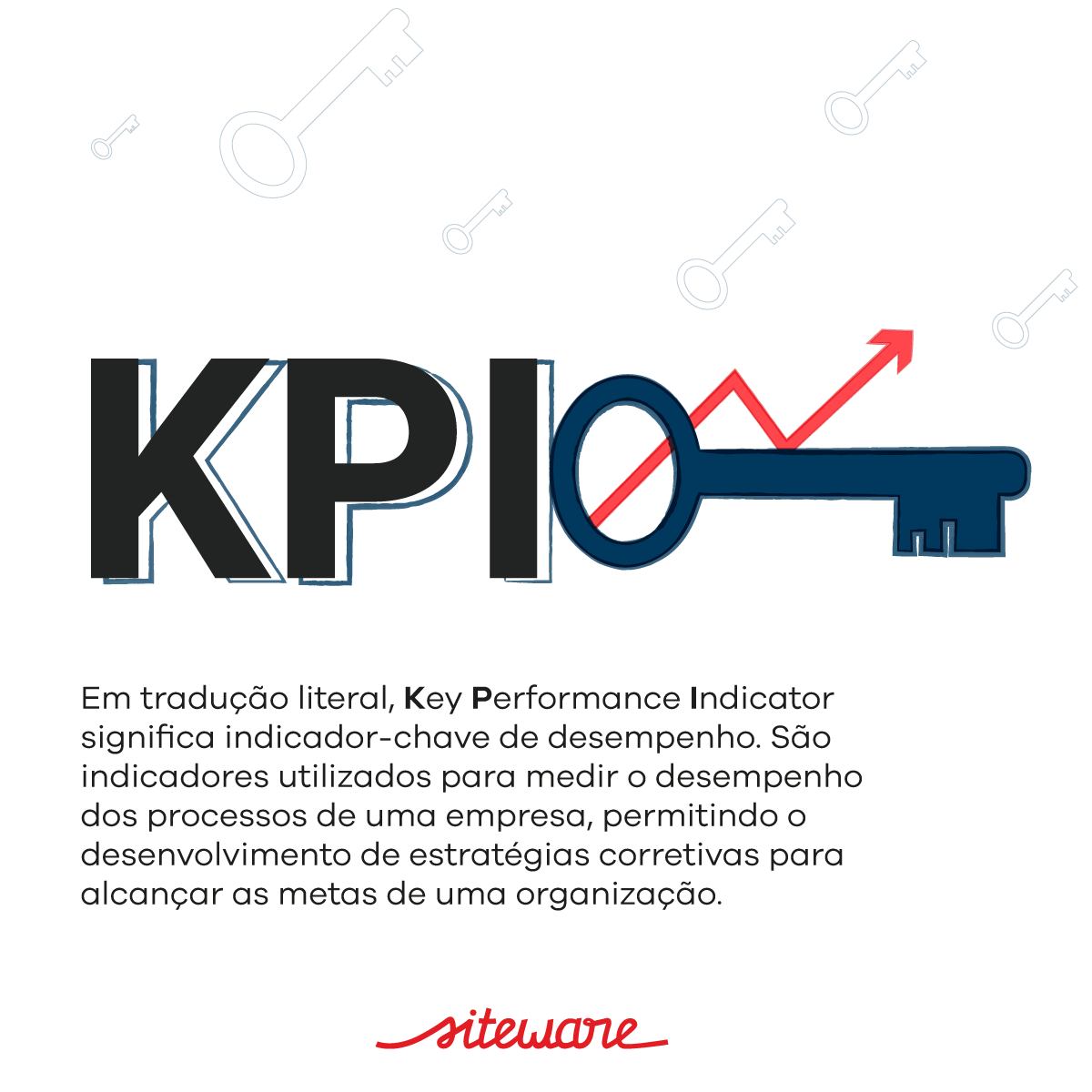
A KPI, or Key Performance Indicator, however, is a specific type of performance indicator with one crucial trait: it is directly tied to the company’s strategic objectives.
In other words, KPIs are the most relevant indicators, the ones that directly affect the success of the business. They are used to measure progress toward the organization’s most important objectives.
For example, if the company’s objective is to increase revenue by 15% next year, the KPI could be monthly revenue growth.
What is the difference between a performance indicator and control items?
The term control item is simply a synonym for performance indicator. Because it is part of the Routine Management methodology brought to Brazil by Professor Falconi, many argue that it should be used for indicators of an operational, routine nature.
Many companies take a more practical view and consider that KPI (Key Performance Indicators), performance indicator and control item are all “the same thing”.
All of them help track the execution of your strategy and how far you have reached your goals!
How do you track performance indicators?
Defining the performance indicator is only the first step in guiding the company on a continuous improvementopens in a new tab journey. That is because defining is not enough if the company does not track it over the established period.
Here is more on how to track performance indicators in your company:
1- Define what will be tracked
First of all, you need to decide which indicators are most important to the success of your business. That means choosing indicators aligned with the company’s strategic objectives.
Remember that, as we said before, not every indicator will be a KPI. There will be many things to track in the company, but not all of them will be directly connected to the company’s objectives.
So choose the ones that will truly affect your performance, such as revenue growth, customer satisfaction or operational efficiency.
2- Set clear and measurable goals
Each indicator should have a well-defined goal that is measurable, achievable, relevant, specific and time-bound, as SMART goalsopens in a new tab require.
For example, if one of your performance indicators is to increase the lead conversion rate, set a goal such as “increase the conversion rate by 10% by the end of the quarter”. This makes tracking much more objective and lets you measure progress in concrete terms.
3- Use monitoring tools
To make tracking more efficient, it is important to use tools that make it easier to collect, analyze and visualize data.
Performance management softwareopens in a new tab, such as interactive dashboards, can bring all the necessary information together in one place, making tracking faster and more dynamic.
For smaller companies, tools such as Google Sheetsopens in a new tab can be a good fit. For larger companies with good management maturity, however, you will need more robust software, such as Stratwsopens in a new tab.
4- Review, analyze regularly and share
Tracking a performance indicator should not be done just once and then forgotten.
It is essential to review performance indicators regularly, whether weekly, monthly or quarterly, depending on the nature of the indicator.
During these reviews, analyze what is working well, what needs to improve and, if necessary, adjust your strategies to reach your goals.
Also, keeping everyone involved informed about the results of the indicators is essential so that everyone in the organization knows whether they are heading in the right direction. Sharing this data clearly and accessibly helps create an environment of accountability and engagement.
Benefits of tracking a performance indicator in your company
Tracking performance indicators in your company is about helping managers make better-informed decisions, optimize processes and, above all, align the company’s actions with its strategic objectives. Here are some of the benefits companies have gained.
1- A clear view of progress and performance
By tracking performance indicators, the company gets a clear view of how far it is advancing against the goals it set.
These indicators work as a kind of “thermometer” that measures progress and identifies areas that need more attention.
If an indicator is not delivering the expected results, you can adjust strategies quickly.
2- Support for decision-making
Constant tracking of performance indicators provides objective, up-to-date data, allowing managers to make better decisions.
With clear information on what is working and what is not, the company can adjust marketing tactics, operations and even human resources to make sure objectives are met.
3- More team motivation and engagement
When performance indicators are shared with teams, everyone knows exactly what they need to do to reach the goals.
This increases the sense of purpose and engagement, because each employee has a clear view of the impact of their actions.
In addition, transparency in results helps create a collaborative environment, where everyone works together to reach the company’s objectives.
4- Easier communication of results
When you use performance indicators, it is easier to communicate results to stakeholdersopens in a new tab, investors or customers.
The data is clear, objective and backed by metrics that show, in practical terms, the impact of the company’s actions.
This strengthens credibility and trust in the decisions the organization makes.
Next steps
Now that you know what a performance indicator is, how to track it and the benefits of monitoring it regularly, it is time to get to know a tool that can make this process more efficient and accurate: Stratwsopens in a new tab.
Stratws is a platform developed to make tracking performance indicators easier, in an integrated and strategic way.
With it, you can bring together all of your company’s relevant data in one place, letting you see in real time the progress of your most important indicators.
The great advantage of Stratws is that it not only lets you monitor indicators simply and practically, but also offers advanced features for analysis and adjustments.
For example, when you set up your KPIs and other performance indicators, the platform offers detailed reports and interactive dashboards that make interpreting the data clearer and faster.

About the author
Equipe Siteware
Content produced and reviewed by the Siteware team, curated by internal experts in strategic management and corporate performance.