
Management Methodologies
Run industrial maintenance management well and optimize your costs
Industrial maintenance management is the activity that prevents waste and losses in production, supporting higher productivity on the manufacturing line.
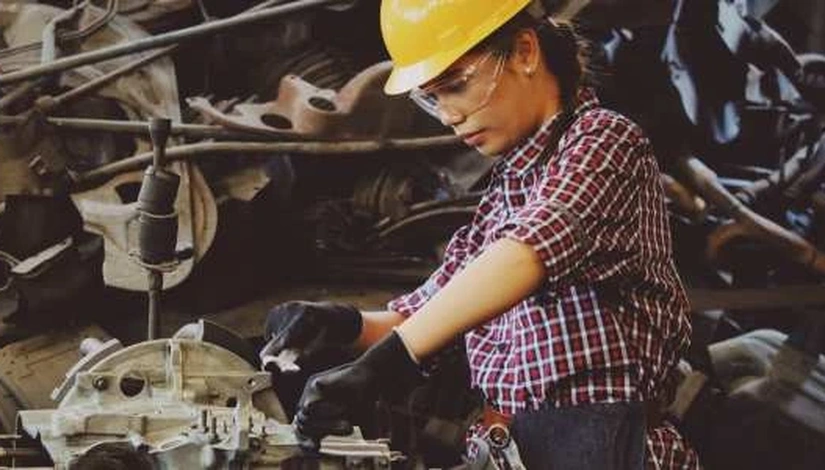
In the 18th century, advances in work mechanization technology started what we now know as the Industrial Revolution. A lot has changed since then, and the market is already in the so-called Industry 4.0. That means technology has fully entered the sector. It also means that industrial maintenance management is an increasingly indispensable activity.
Today, industrial assembly linesopens in a new tab are full not only of machines that perform all kinds of activities but also of sophisticated software and robots that control those machines almost autonomously. The problem happens when those sophisticated devices stop working: a lost day of work can mean a high loss.
That is where the importance of maintenance management comes from, which we explain in this article. Keep reading to ensure the efficiency of your factory.
What is industrial maintenance management?
Equipment defects can represent a large loss in certain industries. Even if the machine does not stop producing completely, the damage can still be significant. When a piece of equipment produces parts without the desired quality, the waste is not only of time but also of raw material and other inputs, such as energy.
In some areas, the case is even more serious. In the chemical and pharmaceutical industries, for example, product leaks can put employees’ health at risk and cause accidents, with consequences for public health.
Industrial maintenance management is the activity, in a company, that seeks to keep these episodes from happening. The industrial maintenance department ensures that all equipment works in good condition, which protects the company’s profitability and the well-being of teams and the community.
Read more about strategic management in our free e-book: E-book: Strategic Management, reach your company’s objectives and maximize your resultsopens in a new tab (in Portuguese)
More than just fixing defective equipment, industrial maintenance management covers several activities. Among them, we can highlight:
- monitoring equipment;
- diagnosing actual problems and, above all, potential problems;
- preventing machine malfunction;
- quickly fixing any kind of defect that may arise, minimizing losses.
Today, there are specific courses to train professionals specialized in industrial maintenance management. These professionals learn not only to deal with the equipment itself but also acquire a proactive approach that handles part of the problems before they even appear. That is the ideal scenario, since prevention avoids losses and damage.
What are the types of industrial maintenance?
In industrial maintenance management, there are a few types of work that can be done. Anyone who believes maintenance is an action to be taken after the malfunction has already appeared is mistaken. But in some cases prevention is not possible, and the industrial maintenance management professional has to act fast, working on damage reduction. Here are the main types of industrial maintenance.
Preventive maintenance
The name leaves little doubt about the purpose of this type of maintenance: preventing problems from appearing. To do that, maintenance should be carried out at well-defined time intervals, which make it possible to identify any wear and replace parts before they stop working.
Predictive maintenance
Unlike calendar-based prevention, predictive maintenance relies on monitoring the real condition of the equipment. Instead of replacing parts at fixed intervals, the team follows signals from the machinery itself, frequently or continuously, to predict when intervention will be needed. The analysis shows whether or not a team of mechanics needs to be sent to the equipment.
On machines that run autonomously, this monitoring cannot be done by visual inspection alone. For these more sophisticated machines, equally advanced techniques are needed to identify problems at an early stage.
One example of these techniques is measuring the machine’s temperature with an infrared thermometer. Other analyses, such as oil analysis, the vibration the machine produces, acoustic analysis or online monitoring around the clock, also show when maintenance is needed.
Corrective maintenance
Corrective maintenance can be divided into two subcategories. The first is unplanned, or emergency, maintenance: repairs made on an urgent basis, when something gets out of the control of the industrial maintenance management professional. This is the type of maintenance that generates the highest costs and that should be avoided.
Even in the best-organized factories with good industrial maintenance management programs, unforeseen events can happen. In those cases, maintenance work should be done as quickly as possible and with the least possible impact on the company. Preferably, whenever possible, activities not directly related to the defective equipment should continue as close to normal as possible.
The second subcategory is planned corrective maintenance. Here, the defect is detected, through inspection or monitoring, and the repair is scheduled with the team, parts and downtime planned, before it becomes an emergency. That way, the impact on operations is smaller than with an unexpected stoppage.
Why does maintenance management matter?
Industrial maintenance management is an essential activity for two main reasons. The first is related to social responsibility. In many industries, an accident involving inputs, raw materials or even production waste can have serious consequences. From injuries to the company’s employees to environmental damage, these are just two examples of situations that can result from flawed industrial maintenance management.
The second reason is efficiency and industrial productivity. As we mentioned, defective equipment can represent large losses for industry. Besides idle hours, malfunction can also lead to waste of raw materials and inputs, with a loss greater than the hours the company went without producing.
Do you know how to calculate productivity in your company? Watch our video and clear up your questions:
Industrial maintenance management is therefore an essential activity in companies that work with mechanized and automated production. It is also part of production managementopens in a new tab, since every stoppage affects deadlines and costs.
A useful tool for keeping industrial maintenance management up to date is OEE indicatorsopens in a new tab, one of the main KPIsopens in a new tab (in Portuguese) in industry. To track these indicators, you will need indicator management software.
Need to track your indicators better? Our free spreadsheet will help: Spreadsheet: track indicators effectively, identify deviations and reach resultsopens in a new tab (in Portuguese)
How to track maintenance management day to day?
Maintenance pays off when the failure, the stoppage and the cost show up in the indicator and turn into action with an owner and a deadline. Without that trail, the same defect comes back the following month and corrective maintenance remains the rule.
In Stratwsopens in a new tab, the AI platform for strategic and performance management created by Siteware, maintenance and productivity indicators live in a visual dashboard, and each deviation is recorded with a root-cause analysis, using tools such as PDCA and Five Whys, and tracked through an action plan until completion. See how Valeopens in a new tab, MRS Logísticaopens in a new tab and Oji Papéisopens in a new tab use Stratws.
Visit our website and explore the Routine Management and Continuous Improvement solution in Stratwsopens in a new tab.

About the author
Equipe Siteware
Content produced and reviewed by the Siteware team, curated by internal experts in strategic management and corporate performance.