
People Management
Human Resources: a TRULY complete guide
Human Resources has become one of the main pillars of companies, so it deserves attention. See what HR does, its trends and the impact of technology.

As market competition grows, Human Resources management has become more and more important and strategic for every company. That is because it covers many aspects, from recruiting, training and motivating employees to benefits management, performance control, succession planning and job role planning.
To give you an idea, according to a study by Deloitte, 74% of executives say that talent management is the top priority for an organization’s success.
So, in this truly complete guide to the Human Resources sector, I will present the concept of the area and how it can help companies attract, retain and motivate talent. What impact technology has on the area, what the trends are for the future and much more!
Interested? Keep reading and see!
Download our resource right now and find out which technologies are essential to the success of Human Resources teams!
What is Human Resources in practice?
Human Resources, or just HR, is a term that describes people management activities involving the hiring, development, training, maintenance and improvement of any company’s main asset: its employees.
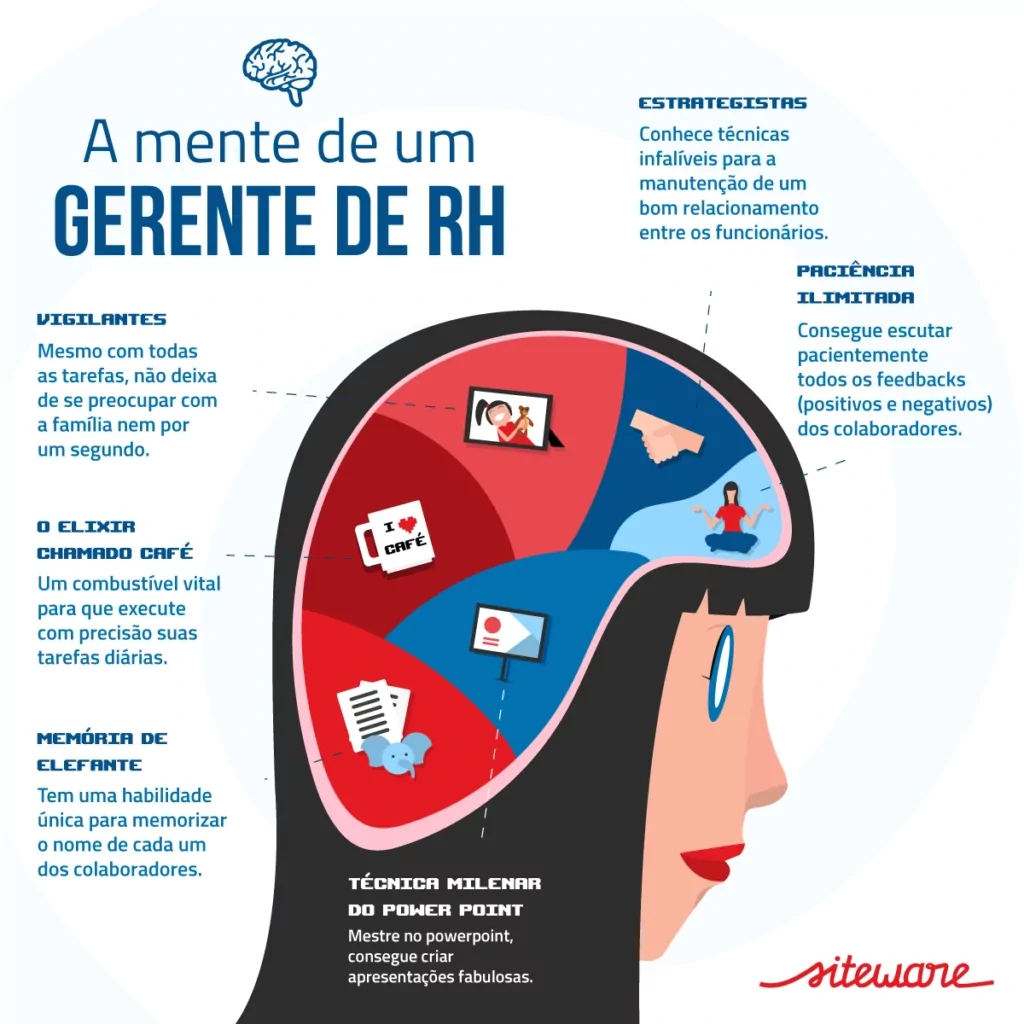
The role of Human Resources is therefore to look after good professional relationships between the company and the people who work there, as well as to provide a healthy and safe work environment. In addition, HR departments have the mission of giving employees information, resources and people training that will help them grow throughout their working journey.
HR also handles matters related to labor laws and employees’ legal standing before the courts, company policies and administrative guidelines.
The Human Resources team is thus usually seen as the bridge that connects the company’s goals, ensuring job security for everyone and bringing employees’ points of interest to managers, making sure everyone is being heard.
What is Human Resources Management?
Human Resources managementopens in a new tab covers a variety of activities and processes related to employees, from hiring and selection to development, retention and performance management.
The main goal of the area is therefore to maximize employees’ potential and performance, so they can contribute effectively to the organization’s success.
Some common practices of Human Resources management involve:
- Recruiting and selection: identifying staffing needs, writing job descriptions, advertising openings, screening resumes, running interviews and choosing the candidates best suited to the available positions.
- Training and development: includes planning and implementing training programs to improve employees’ skills and knowledge, as well as developing career plans to help employees grow in their roles.
- Performance management: involves setting goals and evaluating employee performance, offering feedback and guidance for improvement, and implementing reward and recognition systems.
- Organizational culture management: promoting and maintaining a business culture that is aligned with the organization’s values and objectives.
- Diversity and inclusion: this means promoting inclusive workplaces where everyone, regardless of background, gender, sexual orientation, ethnicity or other characteristics, feels valued and respected.
- Succession planning: involves identifying and developing internal talent for leadership positions and future responsibility.
How does HR influence a company’s success?
Not so long ago, the Human Resources team was responsible only for hiring and dismissing employeesopens in a new tab. Today, however, with a much more strategic and modern view, HR has become a fundamental pillar of any company’s success.
Now, with the strategic role HR holds, companies need to understand how to improve their recruiting and selection process, as well as create healthier working conditions, practice good internal communication and keep their teams motivated.
Thanks to a more strategic view within companies, it is now known that high turnover rates hurt organizations’ results, which is why talent retention becomes essential.
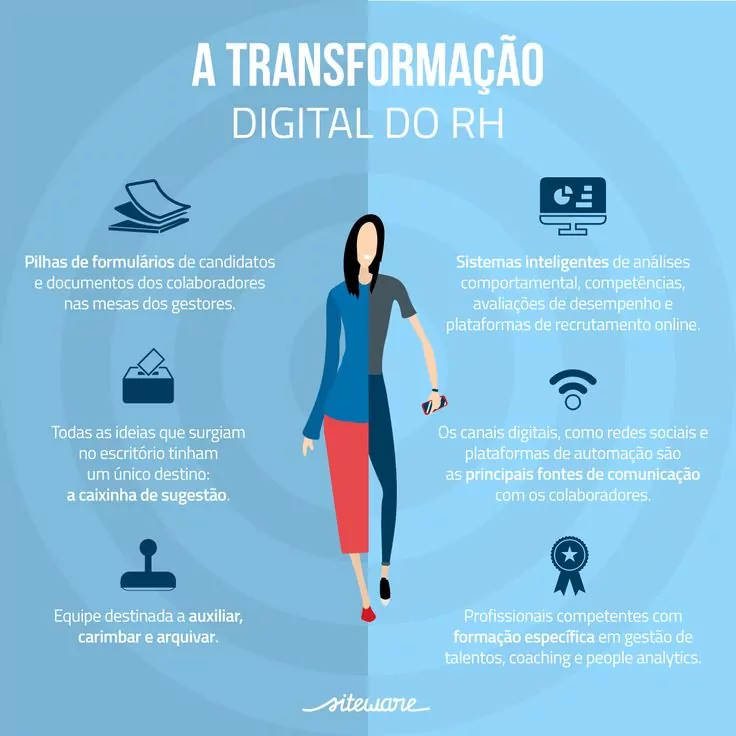
In addition, with the spread of technology, the Human Resources sector has also been positively impacted, supporting the use of tools to improve internal communication and the development of programs to build and maintain Performance Reviewsopens in a new tab.
The impact of technology on Human Resources
Technological advances are having a major impact on Human Resources teams and, as a result, bringing a more strategic view to companies. The use of People Analytics, for example, which analyzes employee data and generates valuable insights for the decisions of leaders and Human Resources teams, is becoming more common and more necessary.
In addition, this type of analysis helps improve bonus and recognition processes based on employees’ own efforts, contributing to a more meritocratic and fair company.
New tools and technologies are therefore being adopted to support these processes, making them more dynamic and effective. That is because companies can gain greater precision in their analyses.
In addition, technology allows Human Resources professionals to better manage human capital in organizations, ensuring team productivity and delivering more consistent results.
This makes it possible to develop smart strategies and plans to deal with change and transform the work environment.

What are the HR sectors?
Within the Human Resources area there can be a few different teams, each with different functions. They are:
1- Personnel Department
The Personnel Departmentopens in a new tab, or just PD, handles today the most bureaucratic tasks related to documentation and labor laws, and may sometimes include compensation and benefits, such as variable compensation.
2- Recruiting and Selection
The recruiting and selectionopens in a new tab team is responsible for identifying staffing needs, writing job descriptions, advertising openings, evaluating candidates, running interviews and selecting the candidates best suited to fill the available positions.
3- Training and Development
This sector focuses on upskilling employees, planning and implementing training programs to improve employees’ skills, knowledge and competencies.
What does a Human Resources professional need to know?
In general, an HR professional should have a mix of hard and soft skills to be able to work professionally. Some of these skills vary according to professional level and the team the person is assigned to. However, some skills common to professionals in the field include:
Soft Skills
- empathy;
- ethics;
- ability to work in a team;
- problem solving;
- flexibility;
- leadership;
- self-motivation;
- good oral and written communication;
- adaptability.
Hard skills
- a degree in Human Resources or business administration;
- an HR specialization;
- training in recruiting and selection;
- use of people management tools, such as people analytics.
What are the HR trends for the future?
Remote work is already a reality that Human Resources teams need to adapt to. More than ever, preparing to run onboarding processesopens in a new tab online has proven essential for companies to adapt to new market demands. In this case, managing a team virtually has proven to be quite a challenge, especially for companies that do not yet use digital solutions for Connected Talent Management.
Another HR trend we are seeing is the creation of increasingly healthy work environments. That is because professionals have seen an increase in psychological pressure in the workplace, and how it has affected the ability to reach good results.
For this, Human Resources teams have been working to create healthier work environments, with flexible work policies, a good recognition system and benefits that go beyond financial ones.
In addition, technology can help HR professionals provide training and professional development to employees throughout their careers.
Learn more about trends for Human Resources professionals: The main trends changing HR forever
Essential processes and practices for the Human Resources team
An efficient Human Resources team needs to establish essential processes and practices so it can support its companies in reaching their goals. HR professionals therefore need to define guidelines such as:
- monitoring performance indicators;
- evaluating employee performance;
- taking part in team development programs.
In addition, the HR team should have a people managementopens in a new tab system in order to provide the best possible environment for personal and professional development. By using suitable assessment tools, HR professionals can efficiently monitor individual performance and people’s competencies.
This will provide a broader, more open evaluation of team performance. It also encourages a culture of professional behavior and corporate responsibility among peers.
Human resources and its role in organizational culture
It is important to stress that Human Resources management plays a fundamental role in creating a healthy and productive organizational culture. That is because it is HR’s responsibility to work closely with company leaders to make sure the corporate climate is positive, cultural fitopens in a new tab is aligned and a welcoming feedback climate is created.
In this case, if an organization aims to increase its retention rate, it should work with HR professionals to encourage and define HR policies, practices and processes that drive the company’s culture, for example.
Likewise, listening to employees through climate surveys and e-NPS and understanding what really matters to them is also vital to make sure the company’s culture is being built to the expected standards.
For this, HR professionals need to know the company’s culture, expectations and goals. It is even more relevant that they work to drive the adaptation and preservation of the organizational culture, because without such an initiative, the company may not reach its full potential.
An increasingly analytical and strategic HR
It is important to point out that the Human Resources sector is increasingly analytical when it comes to a company’s competitiveness. Building a strategic HR has therefore contributed to better people management.
The first step is tracking indicators, such as:
- employee satisfaction and well-being level;
- turnover rate;
- absenteeism level;
- revenue per employee;
- labor complaint rates.
In addition, innovative people analytics tools, such as the use of data, should be applied to optimize the hiring process and workflows. Finally, implementing a healthy, efficient organizational culture free of bullying is very important to increase productivity and improve relationships between people.
Next steps
With HR software you can identify, retain and develop talent through automated competency assessment cycles. A good people management system gives HR more autonomy, because it automates processes and encourages a feedback culture with smart talent management.
And HR management software that helps with this is Stratws.opens in a new tab With it you plan, organize and improve the work routine of the whole team, so employees focus on a culture of results.


About the author
Equipe Siteware
Content produced and reviewed by the Siteware team, curated by internal experts in strategic management and corporate performance.