
People Management
How to implement organizational culture? Find out in 7 steps
Want to move past theory and learn how to implement organizational culture in practice? The 7 steps that can raise your team's productivity.

Do you already know what organizational culture is and how important it is to establish it in your company?
All the moral and ethical rules of conduct to follow are already defined, including the organization’s norms, values and expectations. Even so, there is that question that will not go away: how do you implement organizational culture?
Organizational cultureopens in a new tab (page in Portuguese) is a system of shared values that guides the actions of the whole team.
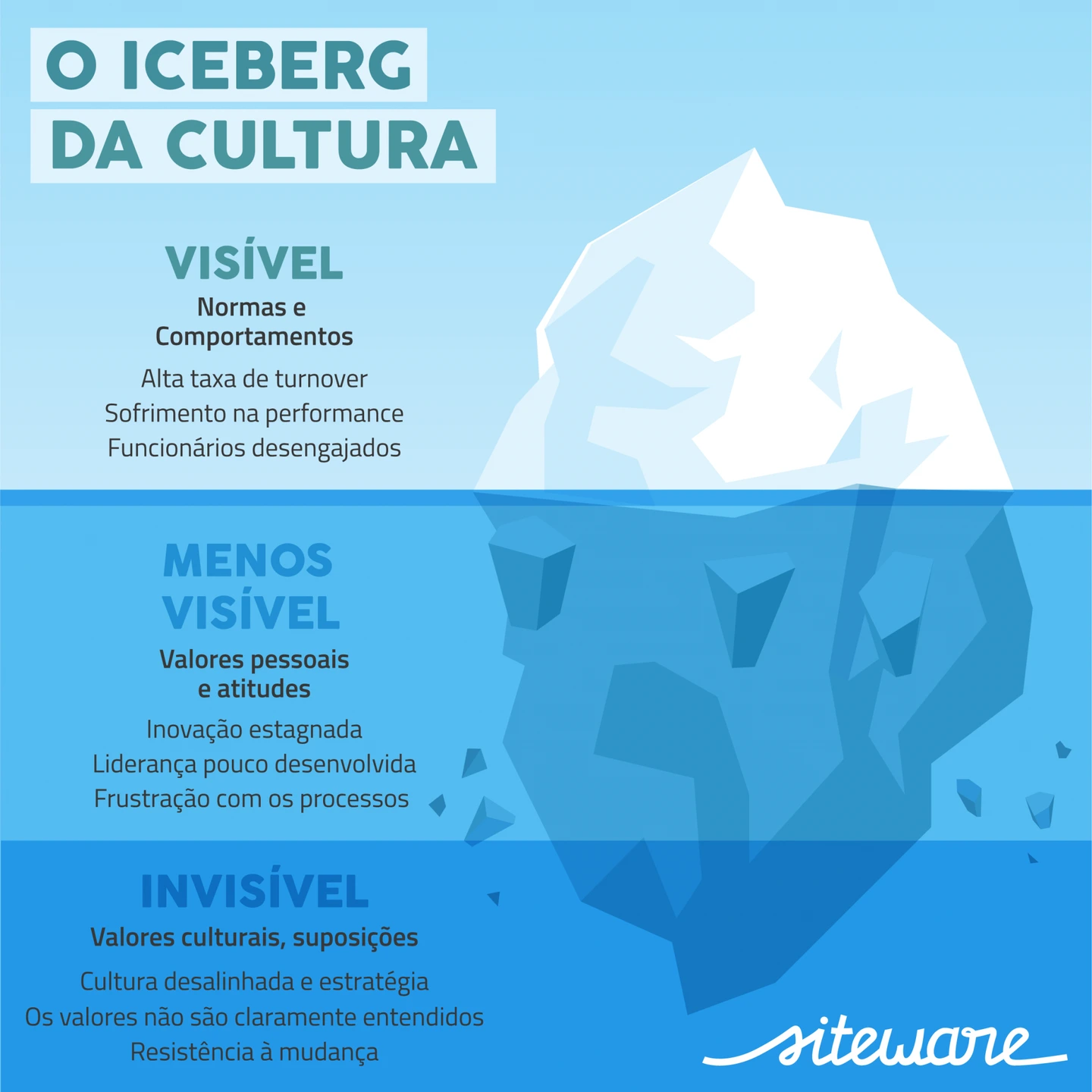
After learning how to build an organizational culture that leads your company to success, you need to follow the right techniques to implement it.
After all, if the culture is not well established, productivity and the work environmentopens in a new tab (page in Portuguese) will suffer. As a result, your company’s results are negatively affected.
Want to know the 7 steps to implement organizational culture in a satisfactory way? It is time to find out how to align employees with the company’s routine and objectives, right?
So follow the step-by-step below and get ready to raise your team’s satisfaction and productivity!
1. Create a complete document about the organizational culture
Before defining your organizational culture, you probably ran an initial diagnosis of the company and:
- Defined your mission, vision and values, specifying where you are today, where you want to be in the future and by what means you want to get there.
- Defined the principles that support decision-making and other matters that sustain the organizational culture.
But you need to make sure all this well-founded information reaches your employees.
Tip number 1, therefore, is to document everything that was researched and defined.
To give employees access to the organizational culture, you just need to share the document with them.
Have everything in writing: from company guidelines to codes of ethics and proposed objectives.
But of course, this is only the first step. Without good internal communication to share this and other information, the organizational culture will not settle properly.
2. Align objectives with your employees
The process of implementing organizational culture must go through this important phase of aligning objectives with your employees.
That is, the documents you wrote with all the company’s relevant information must be presented from the start of the employee journey.
The objectives of both sides must be the same, always based on the company’s missions and values.
Make sure they share the same ideals, whether by citing them in presentations or by making online versions of the document available to everyone. Boards, meetings and online chat channels can help keep communication transparent.
3. Make daily rules clear
Some companies require formal dress from their employees, the so-called dress code, while others do not.
In some cases, you may find more flexible working hours or the possibility of working from home, while in others you will not.
These are just a few examples of rules and items that shape the company’s day-to-day and are part of an organizational culture.
But if these matters are not clear and everyone decides to act in their own way, the culture can be lost. Take care to clarify standards of activities and behaviors and call attention when they are not followed.
4. Set the example
Being a true leader means setting a good example for the team. And why not start by sharing and developing the organizational culture?
The image of directors and managers is extremely important and should therefore be carefully looked after.
No “do as I say, not as I do” in the business setting. Involving the leadership of each area in this process of multiplying the organizational culture is fundamental.
5. Pay attention to hiring and dismissals
From hiring to dismissing an employee: all HR processesopens in a new tab (page in Portuguese) should be guided by the company’s organizational culture.
This means that in a selection process, for example, you should already set out everything related to this culture. Showing how important it is will make a difference when hiring people with the company’s true profile.
And have you thought that the benefit is also the candidate’s? After all, by knowing the company’s principles, they better understand its routine and ways of acting and, by choosing to work there, will become a reflection of the company.
Adaptation in these cases is much simpler, since the person starts working in line with what they also believe in.
Likewise, it becomes unworkable for a person who does not agree with the organizational culture to work there without harming it. That is why it is important to identify profiles that do not fit the company and let them go if necessary.
6. Promote actions to bring the team closer
You can reinforce the organizational culture whenever possible by promoting actions that continuously involve your employees.
Taking part in, and encouraging participation in, social events, creating rituals and special celebrations can help in this process.
What all this closeness and sharing of values have in common is that they revolve around internal communication, which should be the main agenda of any organizational culture.
Promoting continuous feedback is also a way to show, more closely, whether everyone is following the same values. It is also a moment to listen and be open to change.
7. Check the results
Finally, there is only one way to find out whether you knew how to implement organizational culture: check the results promised by that culture.
That involves employee satisfaction and greater engagement, higher productivity and talent retention.
Did you enjoy these tips about organizational culture? Then watch this interesting video on the subject (in Portuguese):
EXTRA TIP: another tip is to run satisfaction surveys. This will help you understand how the company’s climate is going and whether everyone is aligned with the same organizational culture.
How to keep the culture alive
Culture is sustained when the defined values show up in everyday decisions and routines, and not only in the document. That is why tracking results remains part of the process: satisfaction, engagement, productivity and talent retention show whether the culture is being lived.

About the author
Equipe Siteware
Content produced and reviewed by the Siteware team, curated by internal experts in strategic management and corporate performance.