
Projects and Portfolio
The 7 types of agile methodology you need to know
Learn the 7 types of agile methodology, from Kanban to Scrum, and see how each one works, where to apply it and how to choose the right fit for your team.
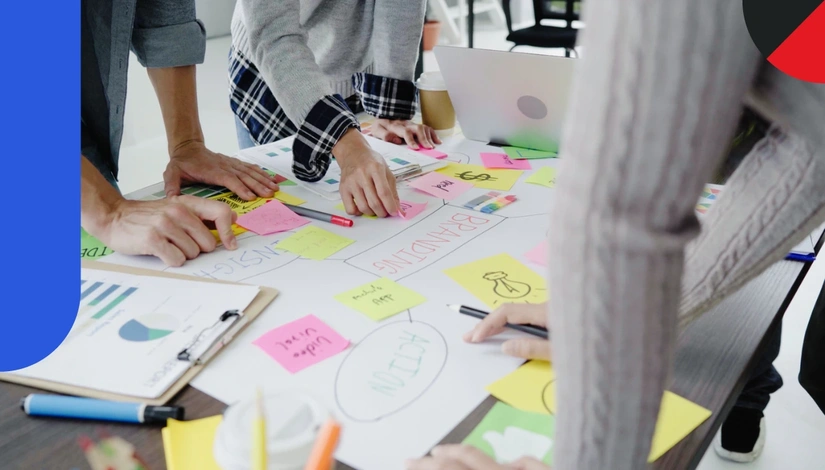
The types of agile methodology emerged over the past decades to deliver faster, cut costs and keep the customer satisfied. With them, a company optimizes processes, launches projects sooner and spends less, which shows in business results.
Adoption is widespread. According to the PMI report Pulse of the Profession 2017opens in a new tab, 71% of organizations use agile approaches in their projects sometimes, often or always.
For that reason, managers who do not yet apply an agile methodology want to understand how it works and in which context to use it.
This article explains what agile methodology is and presents the 7 most used types on the market, what each one does and when it makes sense to apply it.
To go deeper, download the agile methodologies kitopens in a new tab (in Portuguese).
What is an agile methodology?
Agile methodology is a set of practices used in project management to deliver with more speed, efficiency and flexibility. It was created for software development teams.
Because of their ability to simplify processes, these methods reached other sectors. Today, agile methodology can be applied in any organization.
The goal is to make the processes of each area simpler and more dynamic, from the conception of the idea to the delivery of the final product.
If you prefer, watch this video about the types of agile methodology:
Agile methodology beyond IT
Although they were born in software development, agile methodologies work in contexts outside IT. Their principles serve any area that needs adaptation, collaboration and delivery of value in parts.
Some examples:
- Physical product development: companies that create electronic devices, industrial equipment and consumer goods use agile methods to improve collaboration between teams, adjust projects quickly and respond to market changes.
- Marketing: teams plan and run campaigns in short cycles, set measurable goals, collect feedback regularly and adjust the strategy according to real performance.
- Human Resources: recruitment, performance reviews, training and team development gain continuous adjustments based on feedback and changes in demand. The post on agile HR goes deeper into the topic.
- Project management: complex construction, engineering and event projects, where scope changes and new requirements are common, benefit from the method.
- Education: flexible curricula, adjusted to students’ progress and to changes in educational needs.
- Content creation: writers, designers and artists adapt their projects to audience preferences and to the feedback received during the creative process.
- Healthcare: hospitals and clinics improve the efficiency of internal processes, speed up decisions and raise the quality of patient care.
- Event management: conferences and festivals respond quickly to changing requirements and to attendee preferences.
What are the main characteristics of an agile methodology?
The main characteristic of an agile methodology is the continuous improvement of processes, with more cooperation between the team and the customer.
This cooperation happens in constant feedback cycles. Other hallmarks of the method are fast, high-quality deliveries and a flexible project scope.
In addition, agile methodology adds value to the product progressively, always attentive to customer needs, and favors adaptation to change and innovation.
What are the values of agile methodologies?
Agile methodologies help remove bottlenecks and run projects with more agility, delivering a product or service with quality and on time.
These values are recorded in the Agile Manifesto.
Agile Manifesto
In 2001, a group of 17 professionals was looking for a way to deliver software to customers faster. From that search came the Manifesto for Agile Software Development.
The manifesto upholds the following values:
- individuals and interactions over processes and tools;
- working software over comprehensive documentation;
- customer collaboration over contract negotiation;
- responding to change over following a plan.
The essential point is to deliver a quality product and a good user experience, even if the direction of the plans has to change along the way.
Twelve principles of the Agile Manifesto
Based on these values, the authors established 12 principles:
- The priority is customer satisfaction, through continuous and early delivery of software with added value.
- Changes are welcome, even late ones, because agile processes take advantage of them.
- Deliver working software frequently, in the shortest possible timescale.
- Business people and developers work together throughout the project.
- Build projects around motivated individuals, giving them the environment and support they need and trusting them to do the work.
- Face-to-face conversation is the most effective way to convey information to the team.
- Working software is the primary measure of progress.
- A sustainable pace for everyone involved keeps the steps steady.
- Continuous attention to technical excellence and good design increases agility.
- Simplicity, the art of maximizing the amount of work not done, is essential.
- Good architectures, requirements and designs emerge from self-organizing teams.
- At regular intervals, the team reflects on how to become more effective and adjusts its behavior.
These principles apply beyond software development and can be extended to any type of business.
What are the types of agile methodology?
With the concept clear, here are the 7 types of agile methodology most used in companies.
1. Kanban
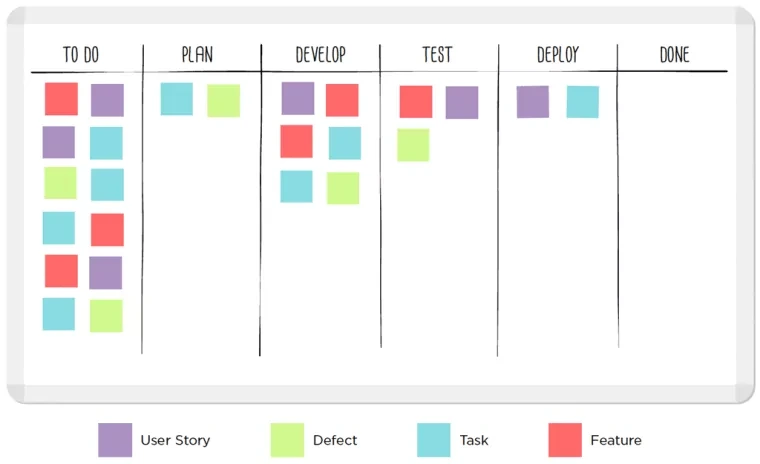
Kanbanopens in a new tab is one of the oldest types of agile methodology. It was born in industry, inspired by Japanese methods of organizing workflow.
The system was developed at Toyota from the 1950s and uses signaling cards to show the status of products and to synchronize inventory with production.
In offices, the system is replicated on boards with sticky notes, today replaced by platforms such as Trello.
This creates a simple, visual method so that everyone understands the tasks, the projects and the responsibilities of each team member.
2. Lean
Lean is a management philosophy that reached the market through the automotive sector. The goal is lean, efficient product development.
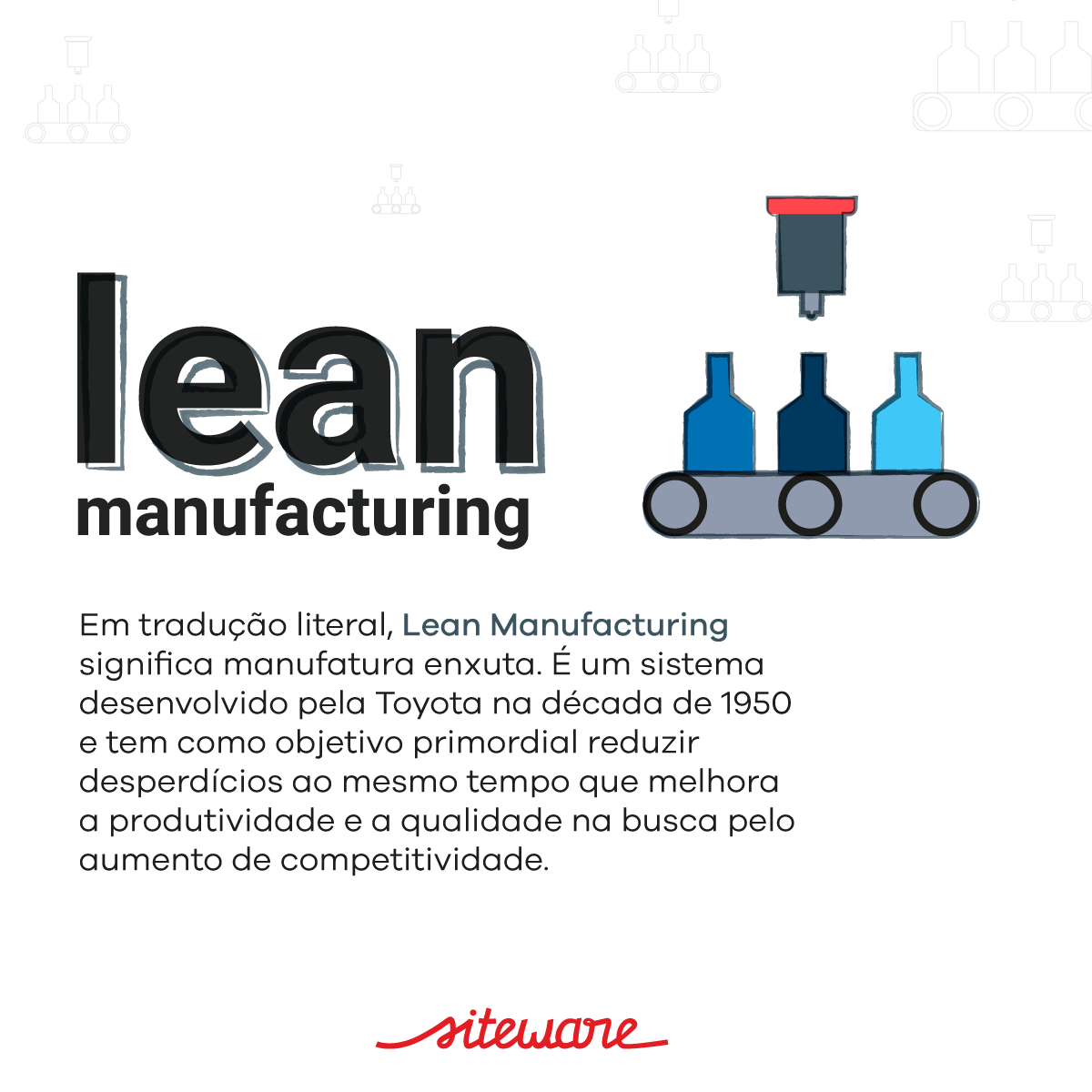
In it, resources and time are applied at the minimum necessary. Production excess is cut, complexity decreases and results improve.
This keeps factors of little relevance to the product from becoming a problem, and the team has a clear workflow.
Deliveries are fast because process bottlenecks are identified early. The savings generated make the company more competitive.
Among the Lean principles are eliminating waste, amplifying learning, delivering fast, empowering the team, building quality in and optimizing the whole.
3. Scrum
Scrum is one of the most versatile types of agile methodology, able to organize the management of very different projects.
It was formally presented in 1995 by Ken Schwaber and Jeff Sutherland and organizes the work of teams around a common goal, such as software or any other product or service.
Scrum defines 3 roles: Product Owner, Scrum Master and development team. The Product Owner is responsible for maximizing the value of the product and managing the Product Backlog, the prioritized list of what will be developed.
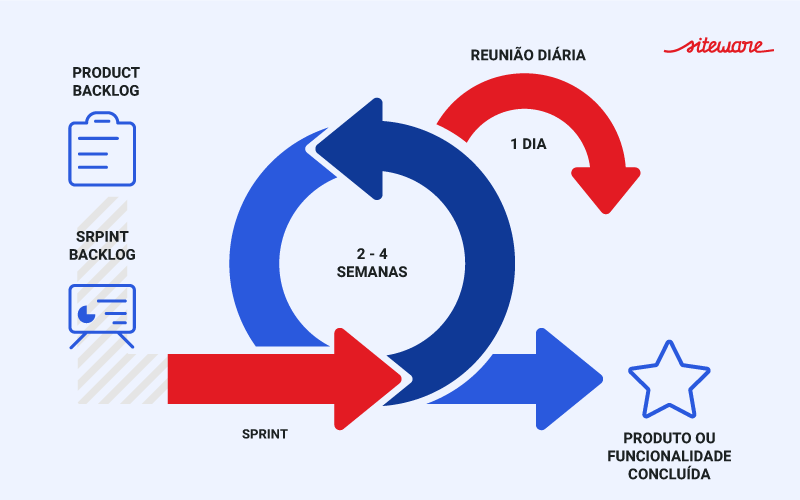
The Scrum Master facilitates the method and makes sure everyone understands and applies it correctly. The development team is the group that creates the product, usually with 10 people or fewer.
Work happens in sprints, short cycles that produce a partial delivery. For that reason, each project has several sprints in sequence.
The Product Backlog can change as the project moves forward, as the team learns more about the product.
4. Extreme Programming (XP)
Extreme Programming, known as XP, is a type of agile methodology focused on software engineering and, for that reason, similar to Scrum.
The difference is the focus. Scrum deals with management practices, and XP deals with technical development practices.
Its principles include testing, reviewing and designing continuously, integrating at all times, creating simple solutions and working in short iterations.
Short cycles reduce uncertainty and risk, with continuous improvement of code, testing and continuous integration. The customer follows the process from start to finish and gives constant feedback, and can request changes along the way.
Some companies combine Scrum and XP to cover both work management and technical practices.
To understand XP in more detail, watch this video:
5. Feature Driven Development (FDD)
Feature Driven Development was developed in the late 1990s by Jeff De Luca, an IT strategist.
He brought the idea of developing by features, and it follows 5 basic processes:
- creation of an overall model;
- building a list of features;
- planning by feature;
- design by feature;
- building by feature.
Some organizations combine FDD with Scrum, applying the feature method in each sprint to improve the planning of the tasks in each cycle.
6. Dynamic Systems Development Methodology (DSDM)
The Dynamic Systems Development Methodology (DSDM) emerged in the IT industry in the 1990s and is a software development framework with continuous customer participation.
It has three phases: pre-project, project and post-project. The pre-project identifies the project and prepares the budget, seeking a rational use of resources.
Next, the project starts with feasibility studies, which consider functional and economic questions. Then incremental prototypes are created to demonstrate the functionality to customers.
All of this happens in feedback cycles, until the final delivery. In the post-project phase, the team performs the necessary maintenance and adjustments.
7. Adaptive Software Development (ASD)
Adaptive Software Development was created by Jim Highsmith for more complex projects. It is based on iterative and incremental cycles, with the customer present throughout the process.
Its application follows 6 principles:
- Mission-driven: each iteration must be justified by a mission;
- Component-based: development happens in small parts;
- Iterative: iterations evolve until implementation;
- Timeboxed: deadlines are fixed and realistic;
- Change-tolerant: changes are welcome;
- Risk-driven: the highest-risk items take priority.
When to use agile methodology?
With the main types in mind, it is worth understanding when to apply them.
It can be used in any type of company, although some focus more on IT. You only need to bring the method into the context of your business.
With so many types of agile methodology, the choice can be confusing. The ideal is to adopt the one that best fits your reality, which tends to increase team engagement.
How to track agile projects in the company
Choosing the methodology is the first step. The second is tracking what the team delivers: whether each project is linked to a strategic objective, where the deadline stands and where the bottlenecks are.
When each area uses its own method and tool, leadership loses sight of the whole. As a result, agile projects are well organized inside the team but disconnected from what the company wants to achieve.
In the Stratws project and portfolio management solution, each project is tracked in full and linked to the strategic objective, with deadline, cost, risk and delivery in view for the PMO, sponsor and board.
This way, the company keeps the flexibility of the agile method and gains a single view of the portfolio, with deviations identified while there is still time to correct them.
Agile projects linked to strategy
Every project with deadline, cost, risk and delivery in view, linked to the company's strategic objective.

About the author
Equipe Siteware
Content produced and reviewed by the Siteware team, curated by internal experts in strategic management and corporate performance.