
People Management
Training meeting: 5 tips to boost engagement
How to run a good training meeting, 5 key tips: defining participants, objectives, topic alignment, methods and time management.

Keeping employees trained to handle their day-to-day work routines is very important.
That is so true that, according to the Harvard Business Reviewopens in a new tab, corporate training investment in US companies grew 32.5% in a single year.
Corporate training is also essential so that everyone fully understands new processes, new roles, new technology resources adopted by the company or new ways of carrying out tasks.
Whenever the company goes through any kind of change, or when a new hire joins the team, it is extremely important to offer training. After all, it is a way to make sure everyone is on the same page.
With that in mind, we put together this article with 5 essential tips for running a good training meeting.
Keep reading to see some good practices that make these meetings more productive and help participants absorb what is taught.
Why hold a training meeting?
Before we get to our 5 key tips, it is worth highlighting the benefits that show why training meetings matter.
Human capital is one of the most valuable assets a company can have and is essential to its success. New ideas and creative solutions come from employees.
But for that to happen, professionals need access to resources and knowledge. Only then can they perform their tasks well and contribute to the organization’s results.
That is where training comes in. Through it, employees develop their skills better and learn how a given process or task should be carried out. This directly affects team productivity, as well as the effort and motivation of professionals.
Among the main benefits that training sessions can bring, it is worth highlighting:
- Better organizational climate;
- Greater employee engagement;
- Higher talent retention;
- Optimized effort;
- Fewer failures and less rework;
- Higher productivity;
- Encouragement of innovation;
- Critical analysis of processes.
Before we get to our training meeting tips, check out the 5 Ps of productive meetingsopens in a new tab:
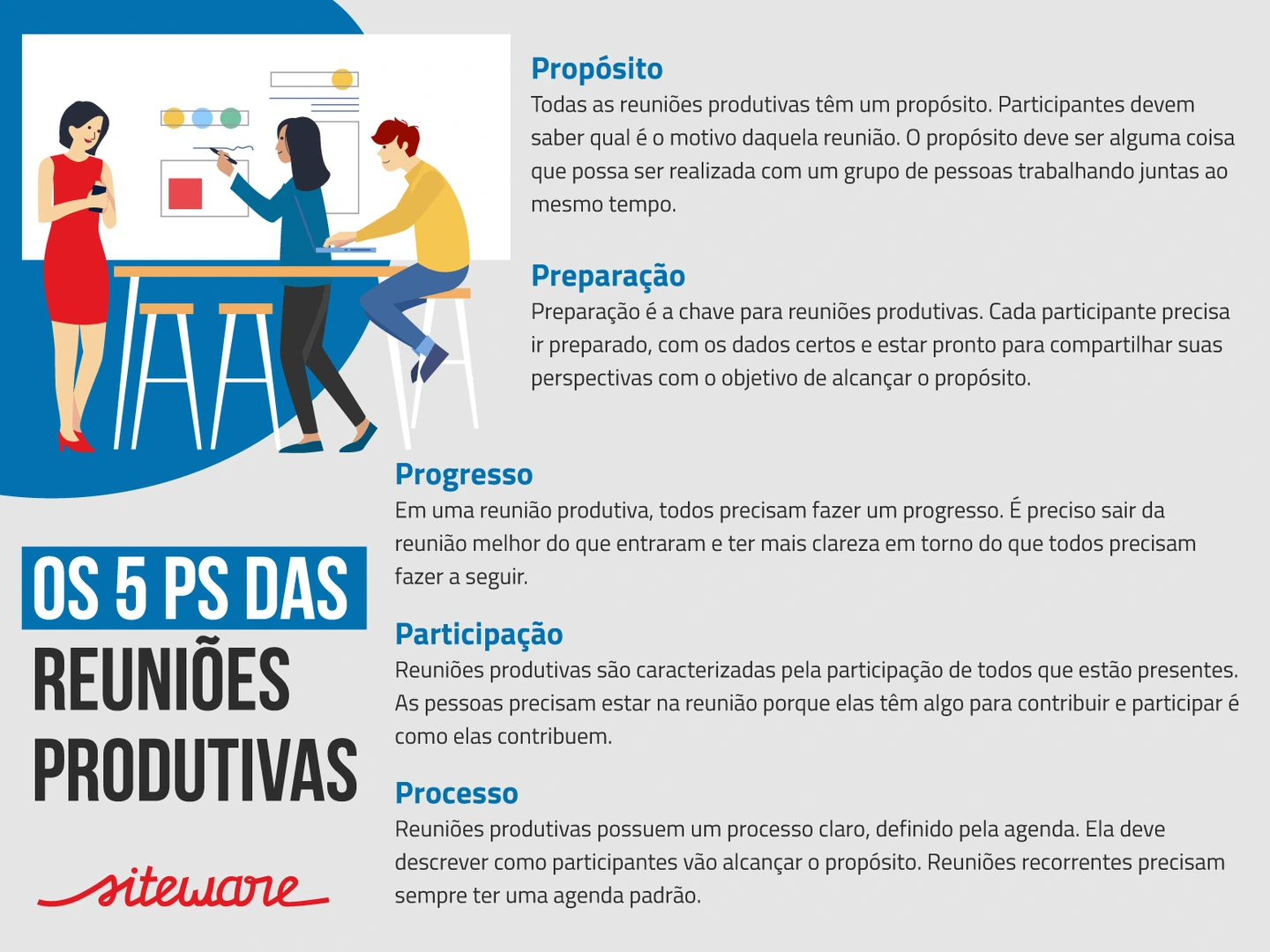
5 tips on how to run a good training meeting
Now that you know more about why a training meeting matters, here are 5 good practices to follow when holding this kind of session in your company.
1. Define the training audience
The first tip for a successful training meeting is to define who it is for. That is, who will attend? Leaders? Managers? Junior or senior employees? Teams from specific departments or the whole company?
Keeping the profile of the people who will receive the training in mind is essential to adapt the topic, the language, the message and the knowledge-sharing activities.
2. Set the objectives of the training meeting
Once you know who the training is for, set the objectives you want to reach. Based on the needs of the group or the company, define which specific results the training meeting should contribute to.
These objectives should be measurable and relevant, achievable and, at the same time, challenging.
3. Align the training topic in advance
After defining the objectives of the meeting, it is easier to choose the central topic of the training, which should be aligned in advance with the participants.
Along with the topic, you also define the subtopics worth covering in the meeting.
Suppose the central topic is “How to improve sales team productivity.” Under that umbrella, you can include subjects such as:
- Good practices to avoid rework;
- Better ways to approach potential customers;
- How to use management software.
That way, you also align the subtopics with the training objectives.
4. Define the methods to be used in the training
It is also important to define how the content of the training meeting will be delivered to participants. At this point, consider the particulars of the target audience and the resources available to run the training.
You can choose, for example, to hold the training in person or remotely. Or whether the meeting will take place inside the company or outdoors.
You also need to think about group activities, hands-on exercises, the materials provided, multimedia resources, the professionals who will lead the training and so on.
5. Manage the available time
For all the content of the training meeting to be delivered successfully, it is essential to know how to manage timeopens in a new tab (in Portuguese). To do so, build a schedule with the planned topics and activities and follow it closely.
That way, you avoid skipping important topics or giving them too little depth in favor of others that could be covered more superficially.
Also remember to schedule breaks. They help participants concentrate and absorb more of what is being taught.
Group activities are very effective training, so here is one that will be a hit in your company:
Check out on our blog: Team alignment meeting: 7 tips to get everyone on the same pageopens in a new tab
Bonus: 4 tips from the Harvard Business Review
To complement our tips, here are 4 more from this Harvard Business Review articleopens in a new tab:
- Create an environment that supports learning;
- Minimize distractions so everyone stays focused;
- Set aside a few minutes of meditation or reflection at the start of the training;
- Make sure breaks are used to relax, not to check email.
Those were some essential tips for a good training meeting. Put them into practice and enjoy the benefits this important practice can bring to your business.
How to track the management of training meetings
A training meeting pays off when the objective is measurable and when what was agreed does not get lost afterward. Without a record, the decision disappears and nobody tracks what is still pending.
In Stratws, the strategic and performance management platform created by Siteware, meetings are recorded with decisions, owners and deadlines, and pending items are tracked through action plans until completion. The indicator that justified the training stays in the same place where the team checks how far it has progressed.
More than 800 companies trust their management to Stratws, across more than 20 sectors of the economy. Visit our website and explore all of the platform’s management featuresopens in a new tab.

About the author
Equipe Siteware
Content produced and reviewed by the Siteware team, curated by internal experts in strategic management and corporate performance.