
Continuous Improvement
Process-Based Management: How It Works in Practice
Learn what process-based management is, how it differs from process management and the functional view, and follow a step-by-step to implement it.
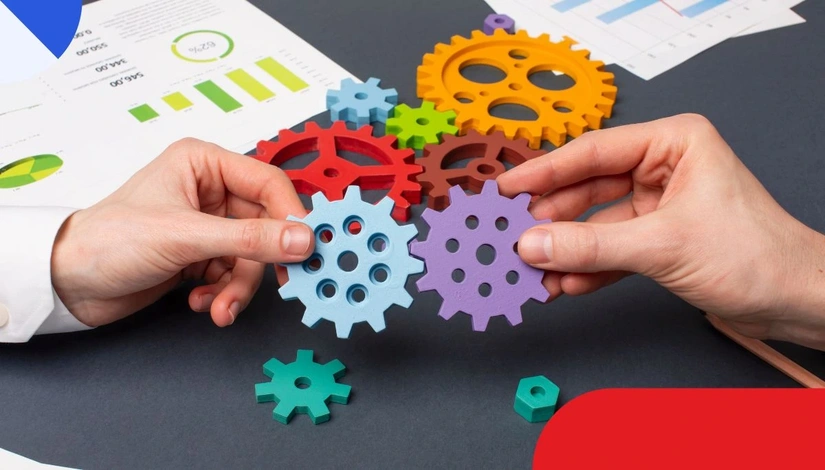
In process-based management, the company is no longer seen as a set of isolated departments. It is run as a chain of processes that cut across every area, with shared strategic goals.
Unlike the traditional functional structure, with isolated departments and rigid hierarchies, this approach takes a holistic viewopens in a new tab. It seeks to analyze, define, optimize, monitor and control business processes, which supports continuous collaboration and constant improvement.
This text explains how process-based management works and how it differs from more traditional models.
Definition of process-based management
Process-based management is an approach that runs the company as an integrated set of processes instead of isolated divisions. Unlike the traditional structure, where each department works independently, it integrates all areas so they work together toward common strategic objectives.
Picture an automobile factory. In the traditional structure, each department, such as engineering, purchasing, production, quality control and sales, operates independently, with its own goals and processes. This can create communication problems, inefficiencies and a lack of alignment with the company’s objectives.
In process-based management, all departments are interconnected. They share needs and problems and work together to optimize the workflow and overall efficiency.
For example, if quality control detects a problem in a part, production and engineering are notified right away. Both can adjust the manufacturing or the product design, which reduces waste and improves quality.
What is the difference between process management and process-based management?
Process management focuses on the administration and optimization of individual processes within an organization. This means identifying, mapping, analyzing, improving and monitoring each process so that it runs efficiently and effectively.
It is essential for each activity or workflow to meet its objectives and quality standards.
In a clothing factory, process management could optimize the sewing process. That would include mapping every step, identifying bottlenecks, implementing improvements and monitoring performance over time. The focus is to make the sewing process, on its own, work as well as possible.
Process-based management, on the other hand, promotes collaboration and communication between departments, so that all processes are aligned and contribute to the organization’s overall result.
In the same example, process-based management would integrate sewing with other processes, such as design, purchasing, production, quality control and sales.
Process view x functional view
Functional companies follow a traditional organizational model, in which the structure is divided into specific departments or functions. Each one is responsible for a particular area of the company, such as marketing, finance, production or human resources.
Each department has its own vertical hierarchy, with managers and subordinates, and works relatively independently, focused on its own tasks and goals. If the sales team needs information about new products, for example, it may have to go through several hierarchical levels to get answers from production.
Process-oriented companies, by contrast, take an integrated and collaborative approach, focused on the business processes that cut across several functions and departments.
An example of a process is developing a new product:
- Start of the process: the marketing team identifies a market need.
- Development: the engineering and production teams work on the design and manufacturing of the product.
- Launch: marketing and sales create launch campaigns and sales strategies.
- Feedback and improvement: customer service collects feedback from consumers and passes the suggestions to production and development.
How to implement process-based management
Process-based management integrates areas and aligns processes with strategic objectives. The step-by-step below shows how to implement it.
Step 1: map the existing processes
The first step is to understand how the company works today. Start by identifying the critical business processes.
Bring together leaders from different departments and ask them to list and describe the main processes in their areas. Then map how each one works.
Use visual tools, such as flowcharts, to represent each process with its steps, owners, inputs (required resources) and outputs (expected results). This helps you see the workflow and spot where departments overlap.
Step 2: analyze and identify improvements
With the processes mapped, analyze the efficiency and effectiveness of each one. Bring the teams involved together to discuss the critical points.
Next, identify bottlenecks, redundancies and inefficiencies that hurt performance, and set clear, measurable goals for the improvements.
For example, if customer service takes too long, set a goal to reduce response time. Use performance indicators (KPIs) to track progress and keep improvements aligned with strategic objectives.
Step 3: redesign and optimize the processes
With the improvement areas identified, redesign the processes.
Involve the teams in workshops to co-create new workflows. This can mean removing unnecessary steps, simplifying tasks or introducing technology.
The goal is to have more efficient, integrated processes that allow smooth collaboration between departments. Practices such as Lean or Six Sigma help guide the restructuring, with a focus on eliminating waste and on continuous improvement.
Step 4: choose tools and technology
To support the process-based approach, evaluate business process management software (BPM) that helps monitor and automate workflows.
This software gives an integrated view and makes it easier to track performance in real time. Also invest in training, with workshops and capacity-building sessions, so everyone understands the new approach and uses the tools with confidence.
Step 5: monitor and keep improving
After implementing the new processes, monitor performance to confirm that the improvements work as expected.
Use the KPIs defined earlier to track results and find new improvement opportunities.
Also build a culture of continuous improvement: encourage every employee to point out problems and suggest improvements, and value innovation and collaboration.
Process-based management with Stratws
Created by Siteware, Stratws is a management platform that does not draw process flows, but supports steps 2, 3 and 5 of the method: analysis, improvement and tracking.
In the feature called Improvement Opportunities, the team records the problem or opportunity and analyzes the cause with methods such as PDCA, FCAR and Five Whys. It then sets the action plan, with an owner and a deadline, and links the affected indicators.
In the feature called Farol, the process indicators sit on a visual dashboard, with comparison against previous years. That makes it possible to confirm whether the improvement produced the expected result and to standardize it in the areas where it applies.
Bring process improvement into the routine
See how to record the opportunity, analyze the cause and track the result.

About the author
Equipe Siteware
Content produced and reviewed by the Siteware team, curated by internal experts in strategic management and corporate performance.