
Governance
Data control: why is it so important?
Learn what data control is, the difference between data and information and how to implement it in your company, with governance, ERP, CRM and privacy law.
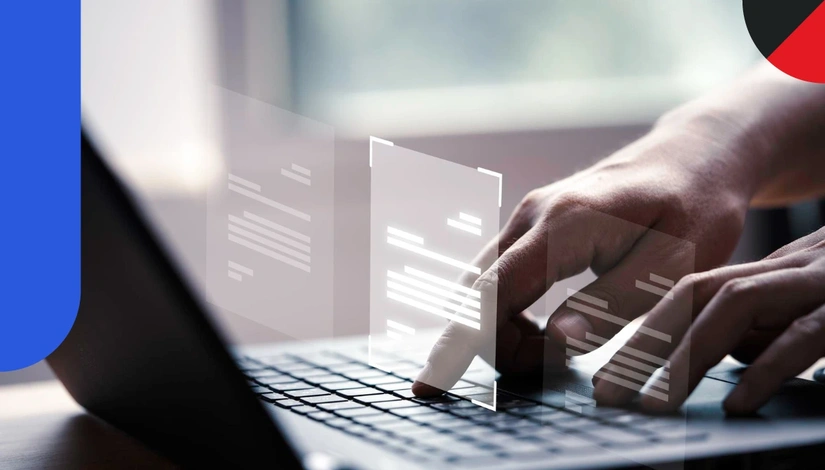
Data control is the business activity that captures, stores and manages the information that flows through a company every day.
This practice supports the company’s strategic decisions. When managers decide based on data, they leave guesswork aside and work with concrete sources.
A Capgemini reportopens in a new tab, “The data-powered enterprise: Why organizations must strengthen their data mastery”, shows how much this matters. The survey heard from 500 technology executives and 500 business executives. Companies that trust their own data and know how to turn it into action, called “Data Masters”, reach up to 22% higher profitability than the rest.
Technology has made it easier to collect information from consumers. But inefficient management puts the company at risk, because the use of that data must follow rules. This article shows what those rules are and how to control the data your business generates effectively.
Data analysis guide + goals spreadsheet
From sales indicators to corporate performance.
What is data control?
Data control involves collecting, storing and using the information the company gathers from consumers.
For that, organizations need up-to-date, secure tools that help with collection and reduce the risk of leaks. This data is the basis for more strategic decisions.
When customer information is lost or goes unused, it is harder to understand their buying habits and the best channels to reach them. That lowers the accuracy of management decisions.
Data shows the profile of the target audience and helps the company plan its market actions at every stage of the consumer journey.
Data control is usually done in dashboards. See in this explanation what they are:

Data x information
The terms are similar, but the concepts are different.
For Valdemar W. Setzer, in the article “Data, Information, Knowledge and Competency”opens in a new tab (in Portuguese), data is a sequence of quantifiable symbols, while information is abstract and refers to the meaning of data.
Information comes from interpreting data. That is why two people can interpret the same data in different ways.
In storage, information is kept in the form of data. It is quantifiable and machines can read it, but they do not interpret it.
Data control x information control
Data control deals with the initial records, in the steps that open the company’s operations. When a customer fills in a registration form, for example, the company has only data about that customer.
At this stage, automated tools help collect, organize and consolidate the records. Interpretation stays with the teams.
When the teams interpret the data, it becomes information that guides the strategies to reach the organization’s objectives.
Importance of data control
Data control supports managers’ decisions and prevents misuse of information. A leak can stain the company’s image with consumers, suppliers, investors and society.
The more centralized and secure the data, the better it is managed. Managers also gain speed in interpreting it and turning it into relevant information.
Data does not concern customers only. It is in every sector and can drive the business’s growth. It is generated in areas such as:
- inventory control;
- finance;
- production management;
- accounting;
- marketing;
- logistics.
The inventory level, for example, helps the buyer decide whether it is time for a new purchase. The daily production volume shows the manager whether the company closed a new order and what its manufacturing capacity is.
Impact of data control on management
A company, however simple it may seem, is a set of data. That is why the decisions of entrepreneurs and managers should be based on it.
The more effective the control, the better the decisions. It is still common to find managers who underestimate data management and rely only on basic or barely relevant information.
Two tools have become essential for data management:
- ERP, business automation software;
- CRM, customer relationship software.
ERP, business automation software
ERP stands for “Enterprise Resource Planning”.
It is business automation software that streamlines management, working as a hub that gathers and reports on every sector of the company. It concentrates operational data, such as:
- accounts payable and receivable;
- cash flow;
- inventory control;
- customer records;
- production planning.
ERP reports reduce operational risks and support decisions. With them, managers control spending better, adjust the profit margin, improve purchasing and inventory management and adapt production.
The reports also show the movement of each sector, which helps find bottlenecks and fix them. ERP ends manual control and brings more efficiency to data management.
The most modern systems run in the cloud, which makes storage more secure and gives real-time control.
CRM, customer relationship software
ERP and CRM are different tools. CRM stands for “Customer Relationship Management”, that is, customer relationship software.
It concentrates the data of the relationship with consumers, such as contacts, purchase history and behavior.
Because it stores data about people, CRM requires special attention. The handling of this data must comply with the Brazilian General Data Protection Law (LGPD).
CRM is a strategic system, because it gives an overview of potential customers and helps create products and services that better meet the target audience’s needs.
The next challenge is to bring the data from these systems into one place, with indicators that show what to do with it.
Data manipulation
Data manipulation is the collection, cleaning, processing and consolidation of the generated data, before it goes to analysis.
This step takes time and effort. Because it is repetitive and error-prone when done by hand, technology has been taking over much of the work.
Done correctly, preparation enriches the data and improves the accuracy of the analysis. It also helps ask the right questions to get the best answers and reveals business opportunities.
How to implement data control in the company
Implementing data control requires modern management software and a culture focused on data administration.
The effort pays off: the organization understands the target audience better, improves internal processes, improves its product mix and becomes more solid and competitive.
Step 1: choose the system
There are many systems that handle data. The first step is to map the business’s needs, which avoids wasting time and money on software that does not add value to what you are looking for.
Look for companies that offer a free trial. That way the team gets familiar with the system and confirms which one fits best.
Step 2: digitize the data
After choosing the system, digitize files and records. The less paper, the better: digitized information is easier and faster to find.
Put as much data as possible into the system. This removes the need for physical space, centralizes information in one place and makes decisions in every department more accurate.
Step 3: keep the data in the cloud
Many programs are already cloud-based, so check this when choosing. Otherwise, you register data in installed software and still have to back it up to the cloud.
With data in the cloud, there is no need to invest in high-capacity storage equipment or to keep servers. Employees access the data in real time, from anywhere.
Step 4: implement security measures
When setting up data control, define the security measures. The company must comply with the LGPD, as seen above.
The goal is for the collection, processing and storage of personal data to follow the protection rules. This applies to data about customers, suppliers, employees and investors.
Also define who can view, edit and enter each piece of data. Access governance is part of control, as much as protection against leaks.
This data is an asset of the business. That is why a good infrastructure to prevent improper access is essential.
How to choose a data control system
The choice of a system should consider four criteria, which revisit the points of this article:
- cloud storage, with real-time access;
- access governance: who views, who edits and who is accountable for each piece of data, in line with the LGPD;
- integration with the systems that already generate data, such as ERP and CRM, without manual entry;
- indicators on the data, which help managers interpret it and turn it into information for decisions.
Data control with Stratws
Stratws, the management platform created by Siteware, does not replace the ERP or the CRM. It gathers the data those systems generate into indicators with a defined source, formula and owner.
It also handles the governance of that data: each person accesses and edits only what belongs to their area, and the environment runs in the cloud, with encrypted data.
Values enter at a single point, the feature called Spreadsheet, through manual entry, Excel import or integration with the ERP and other systems. The indicator dashboards always show the data that is there, which keeps data control consistent from start to finish.
This is the path the article described: centralized data, controlled access and indicators to interpret it. The next step is to define who is accountable for each indicator and where the data comes from.
Define the source, owner and formula of each indicator
Get to know Stratws and see how to centralize company data with governance.

About the author
Equipe Siteware
Content produced and reviewed by the Siteware team, curated by internal experts in strategic management and corporate performance.